Friday, 17 August 2012

RHPP Community Scheme: Open now for applications


If you are a community organisation looking for an opportunity to use bulk buying to bring down the cost of installing renewable heat in domestic properties in your area you may be eligible for the Communities Scheme

The Department of Energy and Climate Change Renewable Heat Premium Payment (RHPP) Community Scheme will support communities to deliver clusters of domestic renewable heating systems.

The RHPP Community Scheme aims to provide communities with the opportunity to cost-effectively organise local buying groups for renewable heating systems, potentially accessing bulk discounts and facilitating easier deployment for installers.

The Scheme will support installation of renewable heating systems in homes by providing vouchers to householders. It is targeted at making renewable heating affordable for middle to low income households and aims to maximise carbon reduction by reaching homes with high carbon heating systems that are expensive to run (especially those off the gas network) and ensuring that heating systems are installed after or alongside energy efficiency measures. Development support will also be provided to successful groups.

  • Technologies that are supported under the scheme include:
  • Solar thermal panels
  • Heat pumps (air to water, ground source or water source, excluding air to air and exhaust air heat pumps)
  • Biomass Boilers

When is the deadline?

Applications opened July 24th and will run until September 7th

Want to know more?

More detailed information, supporting documentation and an opportunity to apply can be found by accessing the Energy Saving Trust website.

Please read documentation before applying, should you have any questions please don’t hesitate to contact the communities team on 02920 467 015 or by emailing communities@est.org.uk.

Surrey Hills Wood Fuel Conference - Fri Oct 5th 2012


Wednesday, 8 August 2012

Job Vacancy - South Downs National Park

The South Downs National Park Authority is recruiting a Forestry and Woodland Officer:


  • Main aim will be to bring more woodlands into active management to improve their biodiversity and secure their future within the National Park landscape.
  • Particular emphasis will be placed on the sustainable management of native and ancient woodland and restoring the ecological value of PAWS in the South Downs.
  • The project will bring together landowners, land managers and contractors to develop and respond to the evolving markets and business opportunities including wood fuel and sustainable construction.
  • The successful candidate must have knowledge and experience of the forestry and woodland management sector, together with knowledge of woodland ecology, recreational and resource management and cultural heritage.
  • They will be highly organised and be able to produce site management plans.
  • Using their knowledge of contracts and contract management, facilitate implementation of projects through contractors. Knowledge of health and safety legislation as it relates to the post is essential.  
Full details can be found on the South Downs National Park website.  The closing date for applications is 23 August 2012, 11:30am.

RHI: 100th accredited application


The 100th installation was accredited to the Renewable Heat Incentive (RHI) scheme on 19th June 2012.

The Meikleour Trust, a Scottish estate, installed a 500kWth biomass boiler to supply heat via a district heating system to a range of buildings including the main house, a greenhouse, holiday lets and other outbuildings. 

The owner also intends to expand the system to a planned housing development in the future. The fuel is local wood chip that is sourced from sustainable local forestry.

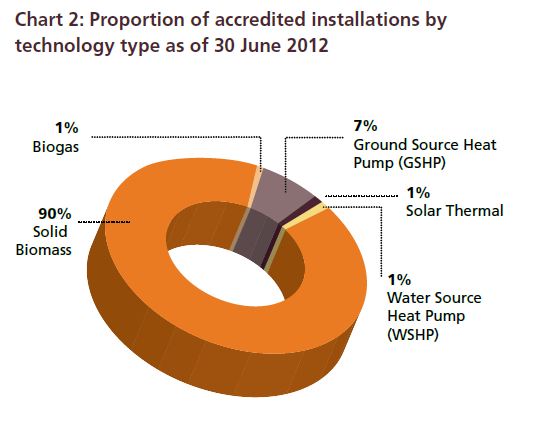
The most recent RHI quarterly report from Ofgem shows a high uptake of solid biomass installations which make up 99% of capacity and 90% of total accreditations under the scheme.

Chart 1 shows the total installed capacity accredited by the scheme since November 2011. As of 30 June 2012, a total of 49.41 MW of installed capacity had been accredited to the scheme.

Heat pumps (ground and water combined) make up 8% of accredited installations and 0.75% of capacity. 

Biogas and solar thermal technologies each account for 1% of the total number of accredited installations as well as 0.24% and 0.01% of accredited capacity respectively.


A total of 121 renewable heat installations have
been accredited under the scheme, seven of which
are preliminary accreditations.
  • Only four applications have been rejected, all because applicants had received public funds or grants.
  • 49.41 MW of total capacity has been accredited, 11.36 MW of which is preliminary.
  • A total of £350,594 in RHI periodic payments has been made to participants.


The number of accredited installations for the second quarter increased from 20 at the end of March to 121 installations accredited by the end of June.

Solid biomass installations continues to make up the majority of accredited installations and accredited capacity.

Installed capacity has increased to 49.41 MW from 5.25 MW. The amount of periodic payments made to participants has increased from £9,707 to £350,594.


Tuesday, 7 August 2012

Renewable Heat Premium Payment for Communities


Our friends at Oxford Renewables have kindly summarised the key points of the RHPP2 scheme (Renewable Heat Premium Payment) which focuses on community-scale projects.

Scheme Aims:

'The RHPP Community Scheme aims to provide communities with the opportunity to cost-effectively organise local buying groups for renewable heating systems, potentially accessing bulk discounts and facilitating easier deployment for installers... 

The scheme is targeted at making renewable heating affordable for middle to low income households... RHPP2 Communities Scheme also aims to maximise carbon reduction by reaching homes with high carbon, expensive heating system (especially for those off the gas network) and ensuring that heating system are installed after or alongside energy efficiency measure.'

Eligibility:

'...legally constituted community benefit organisations or community groups. all lead organisations must have a community benefit structure... aims to support low to middle income homes... communities connected to the mains gas network are... less likely to be funded'

Stage 1 application

'...will be open from 24th July to 7th September...communities should be able to explain what they would like to achieve, identify who they think they will need to work with, what they think they will be able to deliver successfully.'

Project Co-development stage:

'...Proposals will include details of the number of installations to be funded, level of funding required and details of the group will work with households and the private sector... there will be two sets of workshops to help groups through the process'

Stage 2 application:

Applicants wil be able to set their own value for household capital grants up to maximum levels across different technologies (equivalent between 10% and 40% of capital cost depending on how well your project meets the scheme criteria)... applications will be scored against the following criteria:

  • value for money
  • innovation and replicability
  • legacy and learning
  • deliverability

Implementation stage:

'...grants will be paid on completion of installations and themajority of the work will ned to be complete by 31st March. However, groups will be allowed to complete the last 35% of their installations by the end of June 2013 as long as 65% of their installations are complete and grant claimed by 31st March. 

Funding for renewable heat installations will be paid direct to householders on completion of their installation.

The scheme is being administered by the Energy Saving Trust - click here for full details.

Eligible technologies:


  • Solar thermal panels
  • Heat pumps (air to water, ground source or water source, excluding air to air and exhaust air heat pumps)
  • Biomass Boilers


Weblinks

1. Areas that are most likely to attract funding.

2. These are groups that have already received grants to determine available energy efficiency measures and that may be interested in this programme too.

3. Using this tool will help identify the area within which the community has to be located to attract the funding.

4. FAQs

5. Energy Saving Trust RHPP2 pages.

6. DECC policy web pages.

Wednesday, 1 August 2012

Renewable Heat Incentive: Providing certainty, improving performance

Here at Woodfuel Pathfinder Towers we have been trying to decipher the recent slew of information on the Renewable Heat Incentive and related matters.  


Just as we got our collective heads around the review of the Clean Air Act, new Ofgem guidance on heat metering and scheme administration and announcement of DECC’s budget management mechanism yet another consultation on the RHI has been issued.


The “Renewable Heat Incentive: Providing certainty,improving performance” sets out a series of proposals for the non-domestic RHI (Phase I) relating to longer-term budget management and scheme improvements, including biomass sustainability, air quality and changes to the metering requirements.


Needless to say the document is long and technical so we have attempted to extract the salient points from the executive summary.  


The proposals are important and anyone considering investing should set aside a some to read the document and familiarise themselves with the proposed changes, particularly as we may have missed something.


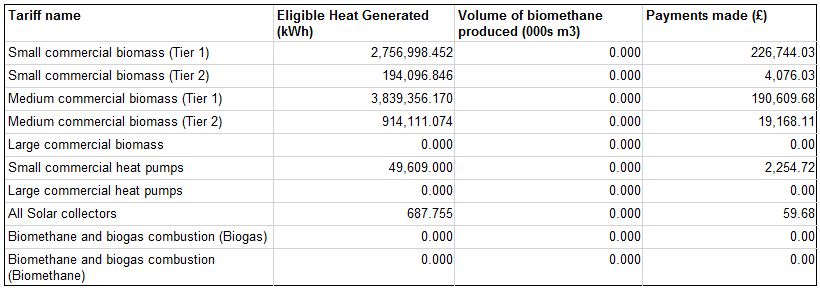
Before we get going we thought we would highlight the following tables that show the latest position on RHI uptake and payments (England only, see Ofgem web site for full report).


Renewable Heat Incentive: Providing certainty, improving performance

Executive summary – key points:

  • Controlling spend while providing certainty and transparency is a far greater challenge than simply keeping within a pre-determined budget.
  • The consultation sets out proposals for longer-term budget management and how DECC will aim to provide market certainty alongside budgetary control.
  • These proposals would only apply to new applications and only to the RHI scheme as it currently stands (i.e. non-domestic). Proposals would be extended to other technologies brought into the non-domestic scheme, which will be consulted on from September 2012.
  • Budget management proposal is to use a flexible degression-based system. Under this system tariff reductions for new applications would occur if deployment was approaching pre-determined triggers, at which point a small tariff reduction would occur automatically.
  • Proposed triggers for each technology and for the RHI overall will be based on the level of deployment required to keep us on a trajectory to deliver the 2020 renewables target.
  • Degression announcements would be made quarterly, with one month’s notice being given for any reductions.
  • Triggers for tariff reductions will be set out in advance and progress towards those triggers will be monitored and made available monthly on the DECC website.


  • The size of possible reductions would also be set out in advance, with a small reduction if deployment is slightly above that needed, and a larger reduction if deployment is significantly higher than that needed for the 2020 renewables targets.
  • In addition, DECC is proposing to carry out periodic reviews of the RHI, starting in 2014, to take stock of the evidence on the operation of the scheme and consider ways of improving it further. These reviews will provide an opportunity to recalibrate tariffs and if necessary, make changes to the tariff structure.
  • DECC has set out a potential option, enhanced preliminary accreditation. This would allow applicants to develop and accredit an installation that, when built, would receive a tariff guaranteed at the point of application for enhanced preliminary accreditation. Applications would be subject to time and size limits according to each technology.
  • It is equally important that the RHI is sustainable in the wider sense, so DECC will put forward proposals for biomass sustainability criteria.
  • The proposals are that biomass used for heat will have to achieve a lifecycle greenhouse gas (GHG) saving of 60% against an EU fossil heat average. The lifecycle assessment would take account of emissions from cultivation, processing and transport of the biomass, and reflect the conversion efficiency of the boiler plant. This would ensure a significant GHG saving relative to the use of coal, oil or fossil gas for heating.
  • Furthermore, for wood-fuel, we propose that the land criteria correspond to meeting the UK public procurement policy on wood and wood products. This approach requires that suppliers should have available documentary evidence demonstrating the wood supplied is from legal and sustainable sources or is from a licensed Forest Law Enforcement, Governance and Trade (FLEGT) partner.
  • For installations below 1MWth capacity, DECC proposes that, from April 2014, they have to purchase their biomass from an approved supplier list. For larger installations DECC proposes that RHI participants would provide reports on the sustainability of their fuel to Ofgem.
  • In the March 2011 RHI policy document DECC committed to introducing limits on the emissions of particulate matter (PM) and oxides of nitrogen (NOx) from biomass installations up to 20MWth capacity. This consultation proposes what the compliance regime should be for those emissions limits.
  • The consultation sets out proposals for simplifying the metering arrangements. DECC proposes that, in most cases, heat transported in external pipes insulated to a specified standard will be eligible heat use and will not be deducted from RHI payments. Therefore, where all heat uses are eligible, only the metering of eligible renewable heat generation would be required.


Other improvements:
  • clarifying the eligibility around ground source heat pumps
  • allowing renewable heat plants to be moved under the RHI
  • clarifying eligible heat use
  • simplifying the rules for biogas metering
  • ensuring biomass boilers are not oversized specifically to claim the tier 1 tariff
  • dealing with how the Retail Price Index (RPI) applies to low tariffs, such as large biomass


With regard to boiler sizing Biomass DECC has anecdotal evidence that there may be installations of biomass boilers which are inappropriate for the heat demand they are intended to serve but have been sized in order to claim the tier 1 tariff only. DECC considers this to be poor practice and is likely to have a detrimental long-term financial impact on the owner of the installation. DECC intends to introduce an eligibility requirement to prevent such installations from benefitting from the RHI.

For all the proposed changes, apart from those on sustainability, within this consultation grandfathering will apply; only applications which are accredited after these changes come into force will be affected. All those installations accredited currently or before these changes, will have to meet current eligibility requirements.


Make your woodland pay its way


A step by step guide to applying for grant funding for roads projects, and to  help bring woodland back into management, has been produced by Ngage, the company responsible for managing the Woodfuel Woodland Improvement Grant (WWIG) on behalf of the Forestry Commission.

WWIG provides a valuable, government funded scheme that has been specifically designed to turn un-managed woodland into productive land.


Mike Furness, Project Manager at Ngage Solutions has written a helpful blog with a simple step-by-step guide for potential grant applicants. It is published on the Ngage website.

Mike is keen to assist woodland owners, to take advantage of this opportunity to make their woods more productive. There is money available for both road and timber projects, and Mike will be happy to talk through proposals even before an application is submitted to help candidates maximise their chances of successful application.


Ngage Solutions is administering the WWIG on behalf of the Forestry Commission in three regions: Cumbria, the South West and the South East. 


This grant is time limited, so act now to find out more about the scheme.


Contact Mike Furness, Project Manager Ngage Solutions Ltd,  on 01494 568970 or 07795 515 413, or by emailing Mike.


To find out more about Woodfuel WIG come and see the Forestry Commission at the APF show 13 1- 5 September stand G4.


For interested readers the Forestry Commission has some guidance on forest roads which can be found here. You will quickly see that it is a technical subject and in many cases it may be far simpler to just call Mike and ask for support!

Tuesday, 24 July 2012

£8m Community Renewable Heat Scheme Opens


The successful Renewable Heat Premium Payment (RHPP) scheme has been extended to include an £8m fund for community led projects.

Community groups up and down the nation will be able to bid for a share of the fund to install low carbon heating technologies including solar thermal panels, biomass boilers and heat pumps into homes in their local area. 


Community-based organisations including community co-operatives, voluntary groups, social enterprises and development trusts will be eligible to apply.


Community groups will need to submit a first stage application to the Energy Saving Trust by 7 September 2012. 


Applications will be judged on a range of criteria, including the project’s vision, potential benefits for the local area, potential partners and any relevant experience of delivering similar projects.


The Department of Energy and Climate Change (DECC) expects to support between 50 and 100  projects with the £8million fund and will announce the winners in December this year.


Full details can be found on the Energy Saving Trust website.


The Kent Downs Woodfuel Pathfinder can provide free support for communities interested in biomass heating, both domestic and commercial. Please contact Matthew Morris on 01303 815 171 or matthew.morris@kentdowns.org.uk for more details.

Thursday, 12 July 2012

Make your woodland pay its way


Over ambitious horse logging?
A step by step guide to applying for grant funding for roads projects or help with bringing woodland back into management.


Don’t miss out on a government funded scheme designed to turn pockets of unproductive woodland into well-managed money earners just because you are unsure of the process.


Mike Furness, Project Manager from Ngage Solutions for the Woodfuel Woodland Improvement Grant,  has written a helpful blog with a step by step guide for potential grant applicants. It is published on the Ngage website.


Mike is keen to assist woodland owners, to take advantage of this opportunity to make their woods more productive. There is money available for ‘Roads’ or ‘Timber’ projects, and Mike will be happy to talk through proposals even before an application is submitted, helping candidates maximise their  chances of success.


Ngage Solutions is administering the Woodfuel Woodland Improvement Grant (WFWIG) on behalf of the Forestry Commission in three regions: Cumbria, the South West and the South East. This grant is time limited, so act now to find out more about the scheme.


To find out more about Woodfuel WIG come and see the Forestry Commission at the APF show 13 1- 5 September stand G4.


Contact Mike Furness, Project Manager Ngage Solutions Ltd,  on 01494 568970 or 07795 515 413, or by emailing mike.furness@ngagesolutions.co.uk.


Monday, 9 July 2012

LC Energy - job vacancy


LC Energy is a leading UK renewable energy company based in the South East of England. 


The company provides premium grade biomass solutions to commercial and public sector organisations including Heathrow and Stansted Airports, Hilton Hotel Group, Universities, hospitals, schools, care homes and private client estates.


LC Energy is looking for an experienced and self-motivated site supervisor with an HGV Class 1 driving licence for a full time position with the company.


Based around the Heathrow Airport area, the role requires site management skills, and the confidence and professionalism to communicate with the company’s clients and sub-contractors.


Experience of operating and maintaining a range of vehicles including tractor & trailers, articulated bulkers, hook lift systems, skip vehicles and telehandlers is an advantage for this role.


In return, we offer a competitive package with benefits and excellent career development potential in a fast growing business.


To be considered for the position, please send your CV together with an introductory letter to Nicola Hopkins on info@LCEnergy.co.uk.


Closing date for applications is 31st July 2012.

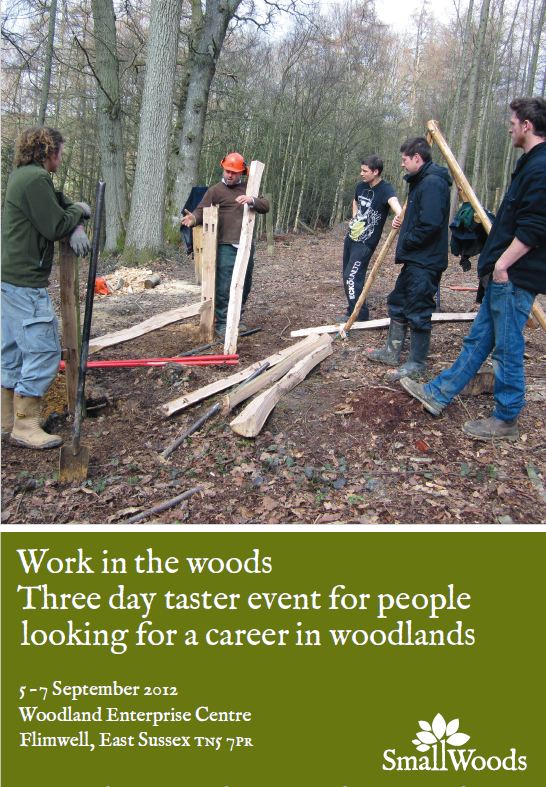
Woodland Jobs: 3 Day Taster Event at Flimwell


Friday, 6 July 2012

RHI Update: New guidance for Applicants


Ofgem's latest update on  the RHI reports the scheme has received over 600 applications and has resulted in  payments for over 13,000 MWh of heat.  Of interest is the extremely high application acceptance rate (95%) with only three schemes having been rejected due to the receipt of capital grants (which are not compatible with the RHI).


Based on these figures it appears that only around 57 applications have been successfully processed and are receiving payments (which hints at a huge backlog of around 543 applications, the majority of which are for biomass).


Ofgem acknowledge the popularity of the scheme and the fact that it is taking longer to process applications than anticipated.  Most importantly Ofgem have highlighted the issues they  have found with heat metering under the scheme.  In response a range of new guidance materials have been made available (see below).


Heat metering issues


Ofgem has conducted a series of early site audits of RHI installations which have revealed significant problems with most installations having errors in their metering arrangements (which need to be rectified before installations can be accredited to the scheme.  Common issues identified include:
  • Meters are not installed according to manufacturers’ guidance (e.g. the meter orientation is incorrect; the meter is installed too close to a bend; or the meter is installed in the flow pipe when it should have been installed in the return pipe etc).
  • More installations qualify as ‘complex’ than as ‘simple’ for the purposes of RHI (meaning often more meters are required than applicants and their advisers might have anticipated).
  • Schematics provided for systems to date often lack clarity or fail to adequately reflect the situation on site. This means that it can be difficult for Ofgem to decide whether the heat metering strategy is appropriate for the installation. This results in a need for further clarifications and work for both applicants and Ofgem.
  • There are errors and omissions in Independent Reports on Metering Arrangements as well as inconsistencies with other documentation.


In addition to the new guides below Ofgem offers the following key advice:


  • Be clear about the triggers which make an installation ‘complex’ for the purposes of the RHI before making an application.
  • Ensure that meters can be and are actually installed in accordance with their manufacturers’ instructions.
  • Ensure that appropriate documentation is obtained from manufacturers or suppliers and retained by the owner of the installation.
  • Provide a schematic which accurately reflects the situation on site, to allow Ofgem to rely upon the meter readings it receives.
  • Ensure that Independent Reports on Metering Arrangements are proof-read and checked against other documentation by their authors before submission to Ofgem.
  • Ensure that the application is well made, by providing sufficient detail against answers and including all supporting documentation at the outset.
New guidance


Wednesday, 27 June 2012

Sustainable forestry strong in England


Latest figures published by Forestry Commission England show our woodlands are incredibly well protected and sustainable forestry remains strong.

According to records, just 0.4 per cent of trees felled in England were done illegally without a felling licence. Conservation habitats, such as heathland, have been restored from commercial plantations whilst keeping a slowly expanding wooded area overall. A thriving timber industry has increased domestic supply as imports have fallen.

Simon Hodgson, Forestry Commission England Chief Executive said:
“For the first time we have been able to publish a suite of new statistics to show what is happening to woods and forests in England and how Forestry Commission England is performing.

“The overall picture is great news for us. Protection of our woods and forests is strong with miniscule amounts of illegal felling. The general public are very much our eyes and ears on the ground and we are always heartened at the public’s willingness to report suspected illegal activity and we are developing an online system to make this quicker, easier and more accurate.

“We see domestic timber supplies increasing while imports shrink and a growing woodfuel network all of which boosts the local green economy. Commitments to restore and recreate conservation habitats from private and public plantations are being met while we see the overall area of woodland expanding."

The Forestry Commission remains a leader as a significant land manager in the care of the Engalnd’s best wildlife conservation sites - Sites of Special Scientific Interest (SSSIs) – with 99.6% in target condition.

“All that said significant challenges remain. Everyone agrees we need much greater growth in creating new woodlands and we are working to significantly increase long term investment from the private sector. We are working to mitigate the threats from a changing climate to trees in the future from new pests and diseases and poor growing conditions. Last, but most certainly not least, is the appalling record of Health and Safety in the forestry sector: skills and training are high but the number of fatalities in a small industry must be tackled."

Castle Head FSC - Tree Planting - Feb 2009
“We are already working with the sector to implement recommendations from the Forestry Regulation Task Force and look forward to receiving the Independent Forestry Panel’s final report to Government.”

27 June 2012
Forestry Commission News release 15523

Tuesday, 19 June 2012

RHI cost control mechanism announced


The Government consulted on how it might apply cost control mechanisms to the RHI in May.  The results have now been published and a summary is provided below.

The mechanism will work as follows:

  • The RHI would be suspended for the remainder of the financial year if the budget forecast suggests that the budget could be breached.  For 2012/13 no more than £70m should be spent on the RHI.  Spending more would be likely to exhaust next year’s budget through the cost of installations already receiving RHI funding, leading to a boom and bust approach.
  • Given the £70m cap, the cost control mechanism should suspend the scheme at 97% of the annual budget (£67.9m) with one week’s notice.
  • A weekly update will be provided on the DECC website setting out progress towards the suspension trigger, alongside a methodology used to calculate the forecast.  This will allow the market to make informed judgements about the likelihood of suspension.
  • Those installations that have already been approved will not be affected.
  • Applications made before the notice period will be processed as normal.
  • Applications made during the notice period will be processed if the installation has been commissioned before the suspension date.
  • Applications made after the suspension date will not be processed.


DECC currently estimates that RHI expenditure in 2012/13 will be around £42m.  While this amount could vary, weekly RHI application rates would need to increase by around 500% by the end of the year to reach £70m. Therefore, DECC sees the likelihood of suspending the scheme as low.

However, DECC acknowledges the high degree of uncertainty about how the market will respond to the RHI and has therefore introduced cost control procedures so it is prepared for unexpected changes in application rates (which is unlikely given that rapid cost reductions are unlikely in renewable heat technologies and also because there are significantly more barriers to the deployment of renewable heat).

As of 27 May 2012 Ofgem had received 533 applications (43 preliminary), had accredited 88 installations and rejected two (on account of these installations having received a grant).  There are concerns about the current backlog of applications for accreditation and Ofgem is working to resolve the delays via reallocation of staff resources and by reviewing approval processes.

A summary of the milestones for the RHI is shown below.


Woodland Creation Grant 2012 - up to £4,800 per hectare


A giant sequoia log, Sequoia National Park, California, undated, c1910
The Forestry Commission has issued some details of the Woodland Creation Grant 2012.

Expansion is a key priority of the Forestry Commission. Grant rates have increased, allowing a maximum of £4,800 per hectare, to provide greater incentive to achieve this.

All applications meeting UK Forestry Standard will be considered as eligible.  Further details on eligibility are provided in this year's Woodland Creation Grant (WCG) Guidance.

Grant rates

The basic planting grant for both broadleaves and conifers has increased by £1,000 per ha, providing a basic planting rate of £2,800 for broadleaves and £2,200 for conifers per ha. 

The overarching England Woodland Grant Scheme (EWGS) for new woodland has three elements that can be applied for, depending on the eligibility of both site and applicant: 
  • Woodland Creation Grant (WCG)This is the main grant that contributes to the costs of establishing new woodland.
  • Additional Contributions (AC)ACs increase the contribution towards the cost of establishing new woodlands that deliver specific priorities.
  • Farm Woodland Payments (FWP)These are compensation payments for agricultural income forgone when creating new woodlands on agricultural land.


Key priorities for the scheme relate to the value that trees and woodlands can play in support of:
  • Water Framework Directive (WFD)
  • The aims of Nature Improvement Areas (NIAs)
  • Offering permissive access in Priority Places
  • Creating, connecting or expanding native woodlands to 5 ha or more
  • Creating new conifer woodlands up to 3 times greater than previously restored native habitat.

For more details on the Woodland Creation Grant and associated grants please visit the relevant Forestry Commission web page here.

Monday, 21 May 2012

Practical workshop on woodland management planning and stakeholder engagement

Making the most of woodlands: Practical workshop on woodland management planning and stakeholder engagement

The Sylva Foundation, BioRegional and the Forestry Commission warmly invite you to attend this free event which aims to help you identify and realise the opportunities which exist from managing your woodlands. 

This event will take place in the following locations:
If you would like to register for your free place at either one of these events, please so do by following the relevant link below:
Event details:

Well-managed  woodlands can potentially provide you with a host of benefits and opportunities. This event will support you in working with your woodland by:
  • Identifying  possible markets for your woodland products with a session on producing for the woodfuel market.
  • Introducing free tools and resources to help you manage your woodlands.
  • A practical interactive session in the afternoon to demonstrate their use.
Experts will be on hand to advise you on aspects of management such as surveying and increasing the productivity of your woodlands.

The day will include the launch of a new resource to help in your engagement with your local community and other stakeholders who you may need to deal with through your woodland work, and as part of the process of developing an UK Woodland Assurance Standard management plan.

The new guidance pack and free promotional materials will help to guide you through this process, and a local woodland owner will be there to offer their first hand experience.

Friday, 18 May 2012

Invitation to view Econergy biomass installation

Econergy will be holding a seminar at the Valley Park Community School on the 8th June to discuss wood heating solutions and demonstrate the Froling wood chip boiler installed at the venue.

Learn how this installation has provided four years of sophisticated low carbon heating for the school, visit a working wood boiler and learn how to progress your own wood heating project with an Econergy advisor.
  • 9.30-10.00 Arrive with coffee
  • 10.00-10.20 Econergy introduction to wood heating and the Renewable Heat Incentive
  • 10.20-10.40 From idea to completion – how to develop your wood heating project
  • 10.40-11.00 Questions and Answers
  • 11.00-11.30 Tour of the boiler
  • 11.30-13.00 lunch and finish
Places are limited so book early to avoid disappointment.  Send an email to confirm if you wish to attend to dawn.riggett@econergy.ltd.uk.  

The school is located at Huntsman Lane, Maidstone, ME14 5DT.

More details on Froling boilers and Econergy installations using this product can be found here.


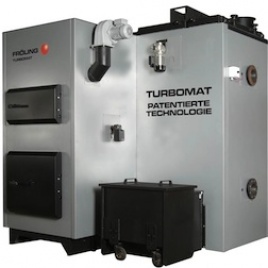
Froling Turbomat


IMPORTANT NOTICE - STOLEN CHAINSAWS & HEDGE CUTTERS

Please be alert for anyone selling any CHAINSAWS or HEDGE CUTTERS in the mid/east Kent area.  These items have been STOLEN.  They were taken from the Dover/Canterbury area.

It is believed the thief may be driving a BLUE/PURPLE VAUXHALL CORSA.  He has been spotted in the ASHFORD area trying to sell the stolen items.  Please remain vigilant and obtain any details possible should you see/come across this individual (Vehicle Registration, visual description, age etc...).

If you have any information or details relating to this theft please contact the police.  I would also be grateful if you could let me know directly.

Please also circulate this information to anyone else who may be able to help catch this thief.

I gratefully appreciate your help on this.
Many thanks,
Kent Downs and Marshes LEADER Project
01622 221389

Tuesday, 15 May 2012

Farming and Forestry Improvement Scheme (FFIS)

The FFIS is part of the Rural Development Programme forEngland (RDPE) and is a scheme of support, developed to help farming, forestry and horticultural businesses in England to become more efficient at using resources.

This scheme aims to help make your business more profitable and resilient whilst reducing the impact of farming on the environment.

There is £20m available under FFIS until December 2013. The grants are for capital items and the grant rate available is up to 40% in non upland areas, and up to 50% in upland areas and the maximum grant allowable per project is £25 000. The minimum grant is £2,500.
What can be funded under FFIS?

To be eligible for funding under FFIS the project must fall within one of the following key areas of activity:
  • Forestry: Projects which improve the economic value of forests through the efficiencies of improved processing and adding value. Eligible items include timber processors, forwarders, forestry trailers, tractor mounted forestry grabs. 
  • Nutrient Management: Improvements in use of farm manures and slurries so as to improve soil quality and reduce reliance on artificial fertiliser.  Eligible items include slurry injectors, mechanical slurry separation systems and Global Positioning Systems.
  • Energy Efficiency: Projects to reduce or recover energy use on farm resulting in a reduction of farm energy bills and carbon dioxide emissions.  Eligible items include heat exchangers, gel coolers and ice builders.
  • Water Resource Management: Rainwater harvesting, recycling and reuse systems to reduce reliance on mains water.  Eligible items include pipework specifically to intercept and divert roof water to a storage facility, rainwater harvesting equipment.
  • Animal Health and Welfare: Projects which bring about significant improvements in farm animal health and welfare.
Who can Apply?
Farmers, foresters, contractors and horticulturalists across England are eligible to apply

How to apply
The application form will go live on the 16th November when the first round opens. In the meantime you are strongly advised to read the guidance in the handbook as there is some preparatory work you will need to do before you can apply.

If you wish to discuss your proposal before completing the forms or if the item you are applying for is not listed in the guidance then please contact your local Defra RDPE Delivery Team. (0300 numbers are charged at a local rate)
Completed application forms will only be accepted if submitted during an open round. The 1st round of the scheme is open from 16 November 2011 until 17 January 2012.

The selection process for FFIS is competitive and applications will be appraised against one another. This means that there is no guarantee of success and not all projects which are eligible will be awarded a grant.

Wednesday, 9 May 2012

Fuelwood open days


Fuelwood are holding two open days (May 25th and 26th at Claywood, Warwickshire) to demonstrate their full range of machinery, which includes:
  • New Sami – Autochopper
  • New Splitta 400
  • Woodcutta & Splitta Fuelwood Factory logs & kindling
  • Transaw 350 XL – Firewood Processor
  • KindletPro & Kindlet – kindling machine
  • New 2012 Japa Firewood processors models
  • Full range of log splitters
  • Plus accessories - log decks, bagging chutes etc
  • New X-Frame Bagga for 1m3 Log bags
Fuelwood are also distributors of Heizohack chippers.

To register please visit Fuelwood's website.

To read a report from Fuelwood's recent event in Kent at Berscoe Engineering, who are a local distributor of Fuelwood's products, please click here.