Showing posts with label felling licence. Show all posts
Showing posts with label felling licence. Show all posts
Monday, 1 February 2016


Friday, 28 February 2014
Major update to the myForest service
The Sylva Foundation has announced two major updates to the myForest service.
For those who are unfamiliar with the service myForest is a free online tool for woodland owners, forestry businesses and wood users. The tools enable users to easily set-up a sustainable woodland management plan and also help with the marketing of home-grown forest products.

The recent updates to myForest include an enhanced management planning template that links with Forestry Commission England. The mapping tool within myForest have also been improved and is now fully functional online GIS.
New Management Planning template
The myForest management plan template has been update to reflect the recent changes implemented by Forestry Commission England (FCE). myForest now enables the creation of management plans as part of the Woodland Planning Grant.
These changes incorporate a number of benefits:
- more user-friendly template
- the template that allows the creation of a management plan that is compliant with the UK Forestry Standard
- provides the woodland owner with felling permissions for 10 years as part of the management plan.
- compliance with new regulations including EU Timber Regulations.
New Mapping Composer
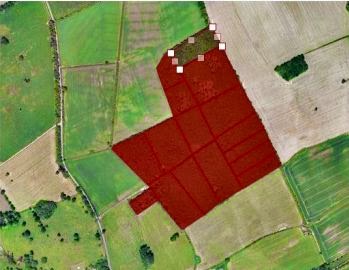
The maps generated can be used to provide felling permissions as part of a management plan or to support an application for a standalone felling licence.
Wednesday, 24 October 2012
Update from Forestry Commission: EWGS application process, Larch felling moratorium and ash dieback (Chalara)
New application process
The Forestry Commission (FC) has created an online facility which allows applicants to apply for EWGS, felling licences and to submit agent authority forms. As an alternative to our paper forms applicants can now complete and submit applications via our website, which will then be sent straight to our Area offices for processing. This can save time and money on needing to print and post forms and provides a one stop shop for those who wish to carry out their work online.
 |
| Screenshot of new application gateway |
Interested in Woodfuel WIG, but concerned about getting a Management Plan (WPG)?
To access Woodfuel WIG applicants must have a current management plan. However, The FC recognises this might be a stumbling block to accessing Woodfuel WIG for some applicants. Therefore, if an applicant wishes to apply for Woodfuel WIG on part of their woodland, it is acceptable to produce a management plan specifically for the area included in the WWIG.
Applicants must be aware that whilst this is acceptable for Woodfuel WIG it is not acceptable for WPG and will therefore, not be eligible for funding under the terms of WPG. In order for a management plan to be funded through WPG it must cover the entire ownership within a landscape unit. This is deemed as meeting the ‘property’ requirements as per Operations Note 3.
Larch Felling Moratorium
As with previous years the FC is introducing a moratorium on the felling of larch during the winter
months due to Phytophthora infection. Full details are available in a revised Operations Note 23. This moratorium affects the felling of larch in zone 1 only. There have been recorded outbreaks of the Phytophthora pathogen in Zone 2, but these are isolated incidences mainly associated with previous rhododendron infection. The FC has decided therefore not to extend the ban on approving larch felling to Zone 2 for this winter. The FC will resume the processing of felling licenses containing larch during May 2013.
EWGS and RDPE Transition
The current RDPE programme (2007-2013) is drawing to a close and negotiations are under way with the EU, Defra and the delivery bodies (FC/NE/RPA) to plan the transition to the next programme. The FC objective, so far as is possible, is to allow existing commitments and ongoing applications to continue with minimum change. However the following issues are highlighted to allow applicants time to plan ahead. Please note these are based on the current situation and could change. Budget pressure across the RDPE programme as a whole may mean the FC has to cease accepting applications before 31st December 2013.
- Woodland Management Grant (WMG): No applications will be approved after 15th May 2013. This is on the basis that the FC currently cannot approve Title 1 (non-capital) contracts in the new programme.
- Woodland Regeneration Grant (WRG) and Woodland Improvement Grant (WIG): If the FIRST payment is in the new programme (1st January 2014 onwards) then it will need to be supported by a management plan.
- Woodfuel Woodland Improvement Grant (WWIG): All claims must be submitted by 30 September 2015.
- Farm Woodland Payment (FWP): Work must be completed and the claim submitted by 31st December 2013. The FC cannot accept claims for FIRST payments after this date.
- All woodland grant activity (except woodland creation) funded under the next RDPE programme will require a management plan.
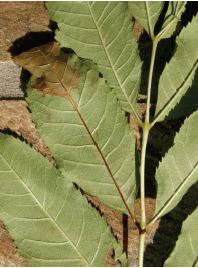 |
| Ash foliage affected by Chalara |
Letters have been sent to Forestry Commission customers whose trees or woodlands may be at risk, a copy of the letter and further information are available on the dedicated Chalara webpage.
Wednesday, 27 June 2012
Sustainable forestry strong in England

Latest figures published by Forestry Commission England show
our woodlands are incredibly well protected and sustainable forestry remains
strong.
According to records, just 0.4 per cent of trees felled in
England were done illegally without a felling licence. Conservation habitats,
such as heathland, have been restored from commercial plantations whilst
keeping a slowly expanding wooded area overall. A thriving timber industry has
increased domestic supply as imports have fallen.
Simon Hodgson, Forestry Commission England Chief Executive
said:
“For the first time we have been able to publish a suite of
new statistics to show what is happening to woods and forests in England and
how Forestry Commission England is performing.
“The overall picture is great news for us. Protection of our
woods and forests is strong with miniscule amounts of illegal felling. The
general public are very much our eyes and ears on the ground and we are always
heartened at the public’s willingness to report suspected illegal activity and
we are developing an online system to make this quicker, easier and more
accurate.
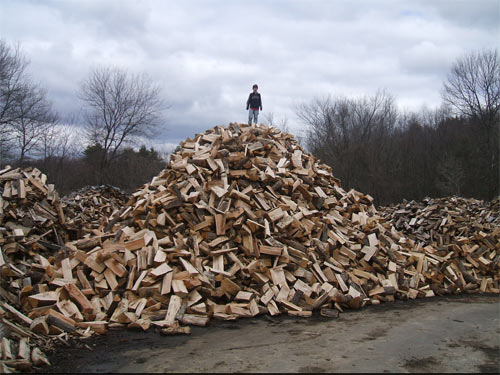
“We see domestic timber supplies increasing while imports
shrink and a growing woodfuel network all of which boosts the local green
economy. Commitments to restore and recreate conservation habitats from private
and public plantations are being met while we see the overall area of woodland
expanding."
The Forestry Commission remains a leader as a significant land
manager in the care of the Engalnd’s best wildlife conservation sites - Sites of Special Scientific Interest (SSSIs) – with 99.6% in target condition.
“All that said significant challenges remain. Everyone
agrees we need much greater growth in creating new woodlands and we are working
to significantly increase long term investment from the private sector. We are
working to mitigate the threats from a changing climate to trees in the future
from new pests and diseases and poor growing conditions. Last, but most
certainly not least, is the appalling record of Health and Safety in the
forestry sector: skills and training are high but the number of fatalities in a
small industry must be tackled."
 |
| Castle Head FSC - Tree Planting - Feb 2009 |
27 June 2012
Forestry Commission News release 15523
Subscribe to:
Comments (Atom)