Showing posts with label tree planting. Show all posts

Wednesday, 27 June 2012

Sustainable forestry strong in England


Latest figures published by Forestry Commission England show our woodlands are incredibly well protected and sustainable forestry remains strong.

According to records, just 0.4 per cent of trees felled in England were done illegally without a felling licence. Conservation habitats, such as heathland, have been restored from commercial plantations whilst keeping a slowly expanding wooded area overall. A thriving timber industry has increased domestic supply as imports have fallen.

Simon Hodgson, Forestry Commission England Chief Executive said:
“For the first time we have been able to publish a suite of new statistics to show what is happening to woods and forests in England and how Forestry Commission England is performing.

“The overall picture is great news for us. Protection of our woods and forests is strong with miniscule amounts of illegal felling. The general public are very much our eyes and ears on the ground and we are always heartened at the public’s willingness to report suspected illegal activity and we are developing an online system to make this quicker, easier and more accurate.
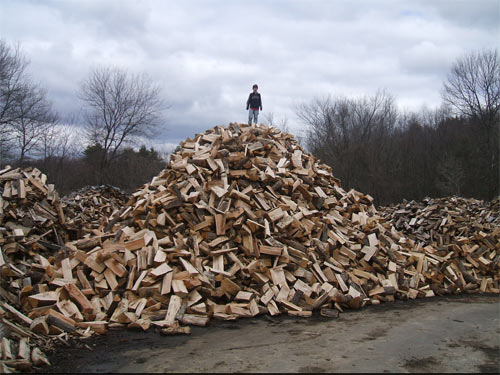
“We see domestic timber supplies increasing while imports shrink and a growing woodfuel network all of which boosts the local green economy. Commitments to restore and recreate conservation habitats from private and public plantations are being met while we see the overall area of woodland expanding."

The Forestry Commission remains a leader as a significant land manager in the care of the Engalnd’s best wildlife conservation sites - Sites of Special Scientific Interest (SSSIs) – with 99.6% in target condition.

“All that said significant challenges remain. Everyone agrees we need much greater growth in creating new woodlands and we are working to significantly increase long term investment from the private sector. We are working to mitigate the threats from a changing climate to trees in the future from new pests and diseases and poor growing conditions. Last, but most certainly not least, is the appalling record of Health and Safety in the forestry sector: skills and training are high but the number of fatalities in a small industry must be tackled."

Castle Head FSC - Tree Planting - Feb 2009
“We are already working with the sector to implement recommendations from the Forestry Regulation Task Force and look forward to receiving the Independent Forestry Panel’s final report to Government.”

27 June 2012
Forestry Commission News release 15523

Tuesday, 19 June 2012

Woodland Creation Grant 2012 - up to £4,800 per hectare


A giant sequoia log, Sequoia National Park, California, undated, c1910
The Forestry Commission has issued some details of the Woodland Creation Grant 2012.

Expansion is a key priority of the Forestry Commission. Grant rates have increased, allowing a maximum of £4,800 per hectare, to provide greater incentive to achieve this.

All applications meeting UK Forestry Standard will be considered as eligible.  Further details on eligibility are provided in this year's Woodland Creation Grant (WCG) Guidance.

Grant rates

The basic planting grant for both broadleaves and conifers has increased by £1,000 per ha, providing a basic planting rate of £2,800 for broadleaves and £2,200 for conifers per ha. 

The overarching England Woodland Grant Scheme (EWGS) for new woodland has three elements that can be applied for, depending on the eligibility of both site and applicant: 
  • Woodland Creation Grant (WCG)This is the main grant that contributes to the costs of establishing new woodland.
  • Additional Contributions (AC)ACs increase the contribution towards the cost of establishing new woodlands that deliver specific priorities.
  • Farm Woodland Payments (FWP)These are compensation payments for agricultural income forgone when creating new woodlands on agricultural land.


Key priorities for the scheme relate to the value that trees and woodlands can play in support of:
  • Water Framework Directive (WFD)
  • The aims of Nature Improvement Areas (NIAs)
  • Offering permissive access in Priority Places
  • Creating, connecting or expanding native woodlands to 5 ha or more
  • Creating new conifer woodlands up to 3 times greater than previously restored native habitat.

For more details on the Woodland Creation Grant and associated grants please visit the relevant Forestry Commission web page here.

Monday, 23 April 2012

Tree planting good for cereal yields


Picture courtesy of Mike Townsend

A new report commissioned by the Woodland Trust and written by Harper Adams University highlights the value of tree shelter belts to farmers in combating the effects of drought.

The report, Managing the drought - A review of the evidence of the benefits of native trees species for shelter on the water regime of pasture and arable crops, pulls together studies from UK and other temperate agriculture systems to show how trees planted as shelter belts help to reduce wind speeds, meaning water loss through evapotranspiration is slowed. This allows the sheltered crop to retain more water and use it efficiently.
In the UK such shelter belts are relatively uncommon, but studies have shown cereal yields of sheltered crops can be higher than that for unsheltered crops, particularly in years when the weather is hot and dry.

Mike Townsend, Woodland Trust Conservation Advisor said, "This report makes it clear that tree shelter belts could be of real value in the development of sustainable agriculture, especially as we face a changing climate and growing demand for food.
"Naturally, trees will compete for water and nutrients, reducing crop yields directly adjacent to the shelter belt. However, these reductions typically only occur up to a distance of one to two tree heights away. Any loss after that point is significantly outweighed by the increase in yield achieved by more efficient water use.

"More research is needed, but this is promising start and shows that good farmers should indeed consider planting more trees." 
Read Mike Townsend's blog for more detail on the report.