We have been alerted to new guidance from the HSE relating to carbon monoxide poisoning and wood pellets and specifically the storage of wood pellets.
The precautions suggested are practical and low cost. Good design can mitigate the risk and training of operatives is essential.
What is carbon monoxide?
Carbon monoxide is a colourless, odourless and tasteless gas that is highly toxic. When carbon monoxide enters the body, it prevents the blood from bringing oxygen to cells, tissues, and organs. It can kill quickly without warning. See Wikipedia and Carbonmonoxidekills for more details.
 How many deaths have been linked to wood pellets?
Since 2002 there have been at least nine fatalities in Europe caused by carbon monoxide poisoning following entry into wood pellet storage areas. Although there have not been any incidents so far in the UK the use of wood pellets is increasing and awareness of this danger is required.
Fatalities caused by the release of carbon monoxide from wood pellets have previously been reported in Europe following personnel entering ships cargo holds (four) or storage silos (two).
Since 2010 there have also been three deaths caused by entry into wood pellet storage facilities in domestic sites. Two were associated with a work activity and the other was a householder. In each case, the entry had been to resolve a technical problem.
Background to wood pellets
Wood pellets are made from dried and milled sawdust and wood shavings that have been compressed into pellets, typically 10-20mm long and 3-12mm in diameter. They do not typically contain any additives or binders.
They are classed as a biofuel, a non-fossil heating fuel. The main countries of manufacture are Canada, North America and the Scandinavian countries within Europe. In 2000, the annual production of wood pellets in Europe and North America was about 1.5 million tons. This was expected to increase to around 16 million tons by 2011. Some wood pellet manufacture is now taking place in the UK.
Factors affecting the amount of carbon monoxide released from wood pellets
Wood pellets for boilers are normally stored in a large sealed hopper/tank or a storage room that has a screw feeder (auger) connected to the boiler. Alternatively, the hopper/tank can be mounted over the boiler for gravity feeding.
Due to the enclosed nature of these hoppers/tanks/rooms, the atmosphere inside can become oxygen depleted and a toxic atmosphere containing carbon monoxide can accumulate. The chemical reactions responsible for carbon monoxide production from wood pellets are assumed to be an auto-oxidation process, especially oxidation of the fatty acids to be found in wood4.
Experimentation has shown that small quantities of wood pellets can produce life-threatening quantities of carbon monoxide in a confined space and that there are various factors that will affect the amount of carbon monoxide produced:
- Age: Pellets will produce more carbon monoxide within the first six weeks of being manufactured.
- Temperature: More carbon monoxide is produced at higher temperatures.
- Wood type: Pellets made from pine contain more unsaturated fatty acids than spruce so produce more carbon monoxide.
- Other factors: Carbon monoxide levels will also increase with the amount of available oxygen present, exposed pellet surface area and amount of mechanical abrasion of the pellets that has taken place.
- Note: In addition to the risk of carbon monoxide from wood pellets there is also a possibility of carbon monoxide being present because of a back-flow of flue gases via the fuel supply mechanism from the boiler. Causes for this include inadequate equipment being installed or a poorly designed flue.
Action required
The HSE is advising all those who use, install, maintain or distribute wood pellet boilers and/or manufacture/store/distribute wood pellets to consider the following:
- Wood pellet hoppers/tanks/storage rooms and boilers should always be installed and commissioned by a competent person, normally approved by the manufacturer/supplier. This is particularly important if the installation involves the replacement of a coal-fired boiler, where existing boiler room and storerooms are often utilised.
- Do not enter the pellet storage area or place your head into a wood pellet hopper as they can contain toxic gases. No personnel should enter the hopper/tank unless fully trained and competent in confined space entry procedures. Controls should be put in place to ensure safe entry as per the HSE's Code of Practice for Working in Confined Spaces5. This should include adequately ventilating the storage area and checking carbon monoxide and oxygen levels with an appropriate device prior to entry. It is recommended that the store room is ventilated at all times, either mechanically or by being designed to have a through draft.
- Ensure that the boiler and pellet feed mechanism etc. is cleaned and serviced by a competent person as specified by the manufacturers' instructions.
- If any problems are encountered with the unit, such as the system not heating correctly or flue gas is flowing into the boiler room, turn the unit off and contact the supplier and/or manufacturer and request assistance.
- Duty holders who store wood pellets, particularly in bulk should have a suitable risk assessment and safe system of work in place.
- Manufacturers, suppliers and distributors of wood pellets should provide adequate health and safety information to the user in their materials safety data sheet.
- Warning signs should be placed on the pellet storage area access door, ideally on both sides so it can be seen when the door is open. The warning sign should include the following information:
- DANGER - RISK OF CARBON MONOXIDE POISONING - There is a danger to life from odourless carbon monoxide and lack of oxygen. Check atmosphere before entry with an appropriate device. No entry for unauthorised persons. Keep children away from the storeroom.
- No smoking, fires or naked flames.
- The room should be adequately ventilated before entering. Keep the door open whilst inside.
- There is a danger of injury from movable parts.
- Filling procedures should be carried out accordance to the instructions of the heating installation company and the pellet suppliers.
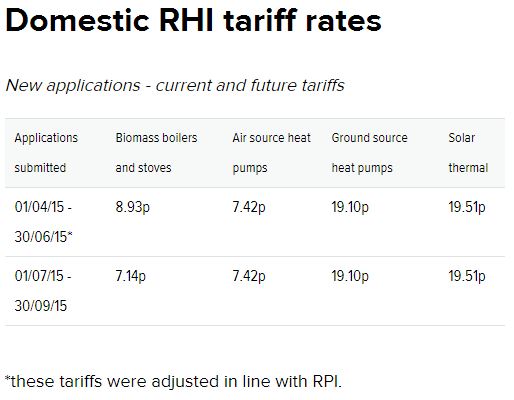
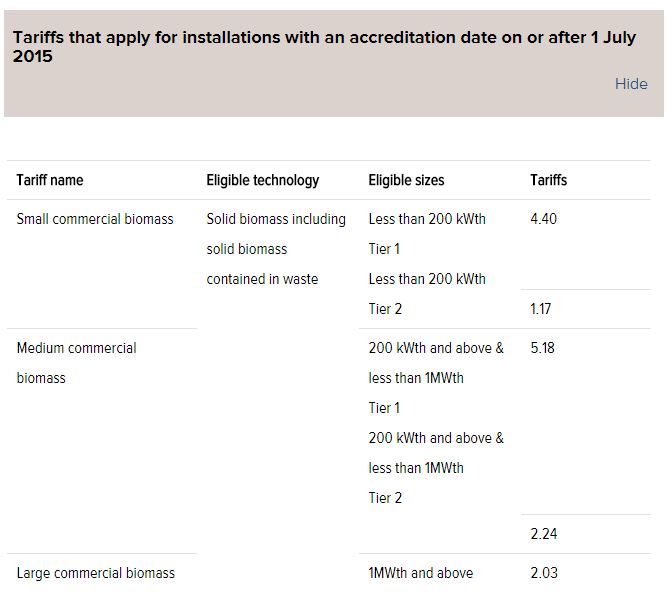
 The Department of Energy and Climate Change has announced changes to the RHI tariffs for biomass in both the domestic and non-domestic schemes.