Showing posts with label grants. Show all posts

Tuesday, 13 October 2015

Making Woodland Work: How grants can help your forestry business


Monday, 19 May 2014

Business development grants available from Low Carbon Plus


The markets for waste wood, biomass fuel, firewood and fencing are continuing to improve in Kent and we are aware of several new projects and initiatives that should impact right across the supply chain. 

We also know that the sector has struggled with investment in machinery in recent years.  This is partially due to poor markets, but also because grants programmes such as LEADER are not currently active.

Help is at hand!  

The Low Carbon Plus project offers grants to businesses to fund 45% of the cost of qualifying projects. The minimum grant that can be awarded is £1,000 and the maximum grant amount is £20,000.

We are aware that several Kent-based woodland management/wood fuel businesses that have already successfully applied to Low Carbon Plus.  One firewood supplier will use the grant to help improve storage facilities whilst a woodland contractor will use the grant for a new forwarder.

More details can be found below.

Projects must lead to business growth and/or job creation.  Grant funding can be used to cover the following types of expenditure:

  • Development finance: funding required to expand the business such as marketing costs
  • Plant and machinery: costs of re-tooling and installation of machinery and hardware, as well as training required to operate it
  • Intangible assets: including costs of purchasing patents, IT, software and licences  
  • Consultancy costs: including marketing and business planning

Funding cannot be allocated retrospectively, and only applications where no activity has yet taken place will be considered.

The initial application form can be found here.  Participants are encouraged to join the Low Carbon Kent business network.

Wednesday, 7 May 2014

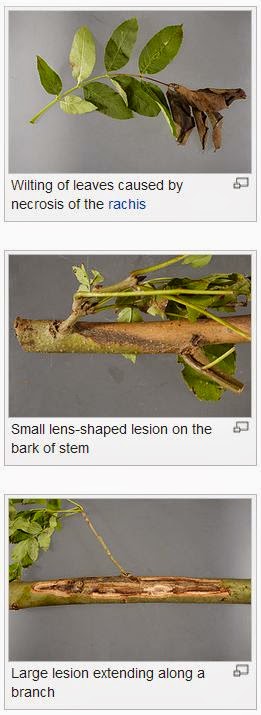
Plant health - new grant and revised guidance from Forestry Commission

Source: Wikipedia
New support is now being offered by the Forestry Commission through a new Plant Health Woodland Improvement Grant (PH WIG) which brings together a number of previous plant health support mechanisms. 

Additionally the FC will be retaining Woodland Regeneration Grant (WRG) where the restocking is following defined Plant Health issues. 

The respective new and updated guidance is available via the following links:

Plant Health Woodland Improvement Grant

Woodland Regeneration Grant

Plant Health WIG

The PH WIG brings together elements of the following previous grant support:

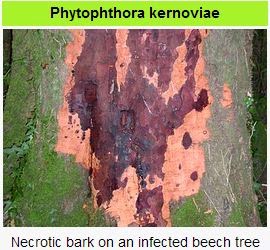
  • Removing Rhododendron within 3km of Phytophthora ramorum and kernoviae infections (which is mainly affecting south west England, although there is one reported outbreak site in Kent near Ashford).
  • Removing P.ramorum infected immature larch paying a site fee to cover the costs of professional help in implementing harvesting plans for P.ramorum infected larch

Source: Wikipedia
This new PH WIG also replaces elements of the previous WIG for removal of recently planted ash on Chalara fraxinea infected sites.

This grant is designed to cover the infections mentioned above and any subsequent plant health disease the Forestry Commission decides requires action that can be funded through EWGS.


Plant Health WRG

Due to the significant uptake of WRG in previous years and the need to maintain funding for other, higher priority, grant types, funding for WRG is
now limited to the 14/15 and 15/16 years to restocking sites related to plant health issues only. The revised guidance sets out: 
Source: Wikipedia

  • Revised eligibility requirements for WRG in relation to Plant Health payment rates and available claim years
  • Extension of the Plant Health related supplements to include Chalara infected sites

Monday, 12 December 2011

More support for community energy projects


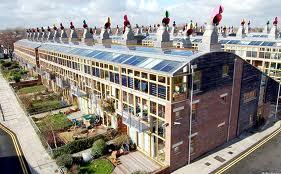
BedZed, London, Peabody Trust.
The Buildings Research Establishment has just opened another round of the Community Sustainable Energy Programme.

The Community Sustainable Energy Programme will provide £8 million to community-based organisations for the installation of microgeneration technologies , such as solar panels or biomass boilers and energy efficiency measures including loft and cavity wall insulation.

It will also provide £1 million for project development grants that will help community organisations decide if they could benefit from a microgeneration and energy efficiency installation.

The programme aims to achieve the following outcomes:    

  • Reduction in CO2 emissions
  • Increased community awareness of climate change and how changes to our behaviour can reduce it
  • Increased skills base of local trades (for example, local builders and building-service subcontractors working on renewable energy projects for the first time)
  • Reduction in energy bills
  • Reduction in reliance on imported energy and increased independence from commercial energy suppliers
  • Stronger partnerships within local communities with lasting social benefits
  • Growth of local enterprise in new technologies
Due to the opening of the Renewable Heat Incentive (RHI) applications for the current CSEP round will only be accepted for heat generating technologies and energy efficiency measures only.

Deadline for the receipt of completed applications will be 5pm Friday 29 February 2012.

For full details on how to apply please visit the BRE CSEP webpages.

Monday, 14 November 2011

£20m for farming, forestry and horticultural businesses

Alan TYERS - Hayrolls, Highdown Farm
http://www.redraggallery.co.uk/
A new £20 million fund to help farming, forestry and horticultural businesses to become more efficient at using resources has been launched. The scheme aims to help businesses to become more competitive and more profitable, whilst reducing the impact of farming on the environment.

This announcement comes only a few days after the launch of the new £10m Woodfuel Woodland Improvement Grant by the Forestry Commission.

Farmers, foresters, woodland owners, agricultural contractors and horticulturalists can apply for grants of up to £25,000 to invest in green projects, new machinery and improvements to animal health and welfare so their businesses can grow in an environmentally friendly way.

The Farming and Forestry Improvement Scheme will fund projects that:
  • save energy and reduce carbon emissions
  • reduce dependence on artificial fertilizers through better use of manures
  • improve soil quality
  • improve animal health and welfare
  • save and recycle water
  • promote woodland management by processing timber more efficiently

In Kent the LEADER programme has been very successful at providing RDPE grants for a wide variety of land-based and rural businesses.  It is understood that the new FFIS scheme may replace LEADER, although there is underspend in some other regions and this may be used to top-up the Kent LEADERs (providing there is enough demand to warrant an extension).

More information on LEADER, the new FFIS scheme and a range of other topics will be provided at our forthcoming contractors event at the Dog & Bear (Lenham) on Thursday, November 17th. 

There are still some places left so please contact us if you would like to come along (matthew.morris@kentdowns.org.uk , 01303 815 171).
Friday, 11 November 2011

£10m to boost woodland management for woodfuel

A new £10m grant scheme to revitalise woodland management has been announced by Forestry Commission England today, 10 November 2011. The new scheme aims to produce woodfuel by improving roads and access for extraction.

Around half of England’s woodlands are undermanaged. There are many reasons for this but one is certainly the high cost of extracting timber so that it can be brought to market. Supporting owners and managers to improve roads and access will reduce harvesting costs and once again make woodland management economically viable.

Pam Warhurst, Forestry Commission Chair said:
“There is an old phrase that says “A wood that pays is a wood that stays.” We are delighted to be able to launch this new scheme to revitalise the economic viability of sustainable woodland management by helping get timber to market. It will create rural jobs and help grow the green economy.”

Applicants will have to have long term management plans for the woodlands that meet the new UK Forestry Standard.  The plans will say how much timber they expect to harvest over the next decade so we will be able to see clearly what the benefits are from each new road built.

The new Woodfuel Woodland Improvement Grant (or Woodfuel WIG), will improve the infrastructure of undermanaged woodlands and contribute to the costs of marketing timber. As well as supplying the growing woodfuel market from thinnings and other operations, well managed woodland can also produce high quality timber. In turn this management improves the quality of woodlands for wildlife.

Woodfuel WIG is available throughout England but most of the funds are targeted towards the South East, South West and Cumbria, where there is greater potential for woodfuel supply.

This new grant is open for applications now and will operate alongside the Farming and Forestry Improvement Scheme, recently launched by Defra to provide comprehensive support to the woodfuel supply chain.

Woodfuel Woodland Improvement grant key features
  • This new grant supports the sustainable production of woodfuel and other timber products and runs to the end of the 2013/14 financial year
  • Work will need to meet the UK Foresty Standard
  • The grant offers 60% towards the cost of work, and doesn’t take account of the timber income that results
  • To apply for a Woodfuel WIG, applicants must have an approved, up to date Woodland Management Plan, and work must be completed and claimed for by 28 February 2014
The following main operations are supported:
  • Roads, tracks and other infrastructure to assist the extraction of timber from woodland. Support will be based on 3 quotes and grant paid on the production of receipted invoices
  • Woodland inventory and costs associated with managing harvesting contracts. Support for this work is based on standard costs

Wednesday, 19 October 2011

Woodfuel Woodland Improvement Grant open for applications

The value of wood as a sustainable resource, either as timber or as woodfuel is growing.

The Kent Downs has a long history of traditional coppice management and is well suited to respond to such market led opportunities.

Of course, sensitive and sustainable woodland management is crucial to the character and ecology of the Kent Downs and provides jobs for local people.  However, traditional sweet chestnut products are growing in popularity and new products are being developed.

The growing market for wood as a sustainable fuel, encouraged by the Government’s Renewable Heat Incentive (RHI) and the Kent Downs Woodfuel Pathfinder offers market opportunities for the lowest quality wood and ‘offcuts’ produced when creating other wood products.

The greatest opportunities lie in:

  • Using your own wood to supply your own heat needs;
  • Adding value to your lower quality wood by selling woodfuel locally, or
  • By selling the end product - heat.
The volatility and the inevitability of increasing prices of fossil fuel means locally produced woodfuel offers a secure and sustainable supply where production and supply is undertaken by local people.


The Woodfuel Woodland Improvement Grant offers support of 60% of the costs of:

  • roads, loading areas, tracks and other infrastructure which will allow you to harvest wood products;
  • assessing the amount of timber which could be sustainably harvested; and
  • the costs of managing harvesting contracts.
Further details can be found on the Forestry Commission website.

If you are interested you will first need an approved woodland management plan, for which the Forestry Commission also offer support through the Woodland Planning Grant.

Contact your local Woodland Officer for further information.