Showing posts with label BSL. Show all posts

Friday, 27 November 2015

Training Opportunity: Woodfuel Quality Standards

Can you afford not to be up to date with BSL compliance and sustainability criteria?

Keep up to speed on the latest developments in woody biomass standards and specifications.

Why attend?

The Ignite Woodfuel Quality Standards course is essential training for anyone involved in the production of woodfuel.  

It includes the latest information on how to maintain compliance with the Biomass Suppliers List (BSL) and RHI land use and sustainability criteria, it provides a commercial insight into quality assurance and third party schemes such as Woodsure and ENPlus and provides a technical introduction to specifications and standards in use for woody biomass fuels including ONORM, BS-EN and BS-EN-ISO.
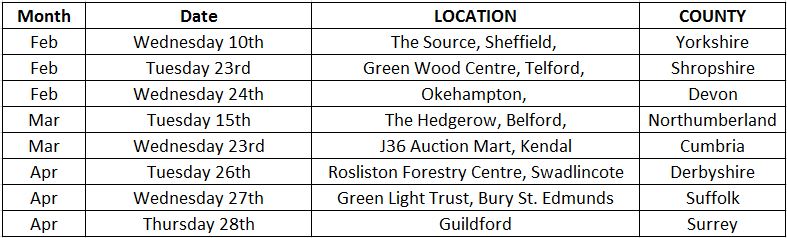

This one day course covers the key legislation and sustainability criteria which need to be considered during the production and specification of woodfuel. 

The day is divided into four sessions, including an outdoor based practical and demonstration:
  • BS EN and BS EN ISO Standards
  • Specifying Woodfuel 
  • Chipping & Sampling
  • Fuel Quality Assurance including meeting BSL requirements

The full course content can be accessed here.

The course is delivered by our qualified and experienced trainers with over 10 years of experience in delivering Ignite woodfuel training courses. 

Cost

This one day course costs £150+VAT* which includes the LANTRA Awards certification fee, course materials, lunch and refreshments.

* Members of Woodsure, the Wood Heat Association and the Confor Woodfuel Suppliers Group can take advantage of a 10% discount on course fees - just let us know at time of booking.

Ignite courses are accredited with LANTRA Awards and course fee includes certificate of attendance.

If you would like further information on any of our courses, please contact:

Erica at erica.spencer@ruraldevelopment.org.uk

or on 01765 609355.

For further information on events and courses being run by RDI, please click here.


Tuesday, 8 September 2015

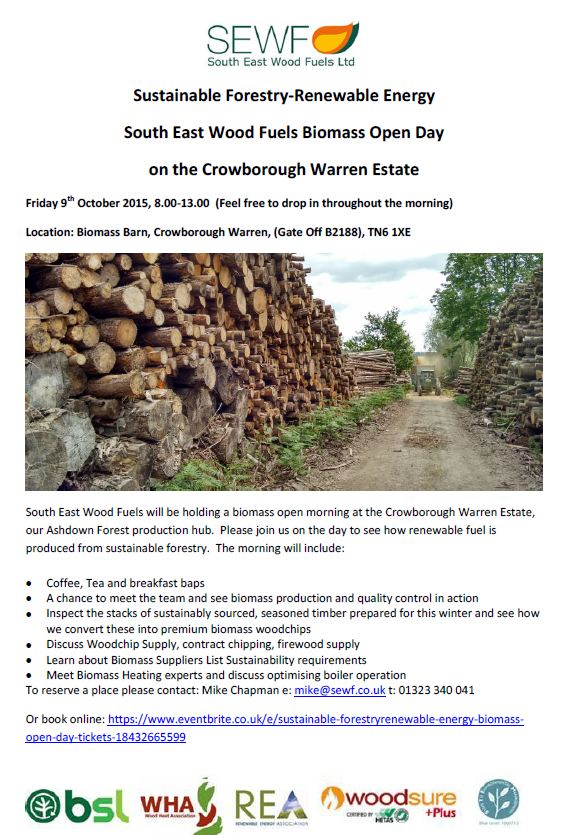
South East Wood Fuels - Biomass open day


Thursday, 21 August 2014

RHI - biomass sustainability and Biomass Suppliers List (BSL)

Over the last few weeks we have received several emails from DECC regarding their policy for biomass sustainability that it applies to renewable energy subsidy schemes including the Renewable Heat Incentive (RHI) and Renewables Obligation (RO).

Given the volume of reading required to keep up with all of the recent announcements we have attempted a summary to enable readers to locate some of the important documents.

First up is the Biomass sustainability policy Q&A that was released following the consultation workshops that took place in London.  This is well worth a read as it neatly summarises some key questions as well as confirming the following:
  • Introduction of the greenhouse gas and land criteria in the RHI/RO biomass sustainability policy will now be introduced from Spring 2015.
  • Non-domestic RHI participants will have two methods of demonstrating compliance with the forthcoming sustainability criteria:
These 'criteria' are:

  • GHG criteria: Biomass fuel used by RHI participants must meet a lifecycle greenhouse gas (GHG) emissions target of 34.8g CO2 equivalent per MJ of heat, or 60% GHG savings against the EU fossil fuel average.
  • Land Criteria: For woodfuel the criteria are outlined in the UK Timber Standard for Heat and Electricity.
Woodfuel meets the Timber Standard for Heat & Electricity if it "...originates from an independently verifiable legal and sustainable source and appropriate documentation is provided to prove it."

Currently this documentation is obtained via one of two routes:
  • Category A: Evidence that the woodfuel originates from a legal and sustainable source can be provided through the use of independent certification of the wood by a recognised forest certification scheme (e.g. FSC, PEFC).
  • Category B: Evidence that the woodfuel originates from a legal and sustainable source can also be provided in the form of alternative/bespoke documentary evidence that provides sufficient assurance that the source of the wood is legal and sustainable (e.g. via a supplier registered on the BSL or via self-reporting - for more details click here).

Summary of post consultation decisions

Some changes have been introduce following the consultation and feedback received during workshops.  These changes are as follows:

  • New requirements to report on the proportion of ‘hardwood’ and ‘softwood’. There will be an additional requirement to report on whether any of the wood used was likely to have come from threatened or protected species.
  • Arboricultural residues will be deemed sustainable under the Timber Standard for the RO and RHI.
  • Not to exempt wood from diseased trees from the Timber Standard.   
  • To “deem sustainable” under the Timber Standard, trees removed from non-forest land for ecological reasons.
  • Not to exempt wind blow from the Timber Standard at this stage but to keep the evidence under review.
  • Not to exempt non-waste residues from sawmills from the Timber Standard.
  • To add ‘highly biodiverse grasslands’ to the list of protected land types in the land criteria for non-wood solid and gaseous biomass.
Copies of the original consultation document and Government Response can be can be viewed on the DECC website.

Further reading:


BSL guidance and Q & A 

UK Timber Standard for Heat and Electricity

DECC February 2013 Government Response document, announcing RHI sustainability criteria 

DECC December 2013 Government Response document, providing an update on RHI sustainability criteria

Ofgem Renewables Obligation sustainability guidance

EU 2010 Report on biomass sustainability

Friday, 9 May 2014

Biomass Suppliers List

We have been referring to new requirements around the sustainability of biomass fuels for some time now so we were pleased to see that the Biomass Suppliers List (BSL) has now been launched.

The Biomass Suppliers List is the process employed by UK Government to ensure that publicly funded subsidies such as the Renewable Heat Incentive (RHI) remain eligible under the EU Renewable Energy Directive (RED).

The RED Directive requires users of biomass fuel that are claiming the RHI to meet a lifecycle greenhouse gas (GHG) emissions target of 60% GHG savings against the EU fossil fuel average.

In a nutshell this means that the carbon footprint of a biomass fuel must deliver a substantial carbon saving compared to oil, gas or coal to ensure that biomass retains its 'low carbon' or 'carbon neutral' status.

What does this mean to users and producers of biomass fuels?

The BSL applies to users, producers, self-suppliers and traders of 'woody biomass'.  

For a fuel user in receipt of the RHI (commercial or domestic) they will need to demonstrate to Ofgem that their fuel is from a source recognised by the BSL. 

In turn this means that anyone supplying an RHI accredited biomass boiler will need to be registered on the BSL.  Self-suppliers will also need to be listed on the BSL.  

In addition to BSL accreditation biomass traders/wholesalers will also be listed on a public register.

Effectively any fuel used or supplied to an RHI accredited boiler will need to have BSL accreditation.

Which fuels are included?
  • Pellets – virgin
  • Pellets – waste
  • Pellets – waste virgin blend
  • Briquettes – virgin
  • Briquettes – waste
  • Briquettes – waste virgin blend
  • Chip – virgin naturally seasoned
  • Chip – virgin force dried
  • Chip – waste
  • Chip – waste virgin blend
  • Firewood – virgin naturally seasoned
  • Firewood – virgin force dried
  • Firewood – waste
  • Firewood – waste virgin blend
What are the requirements?

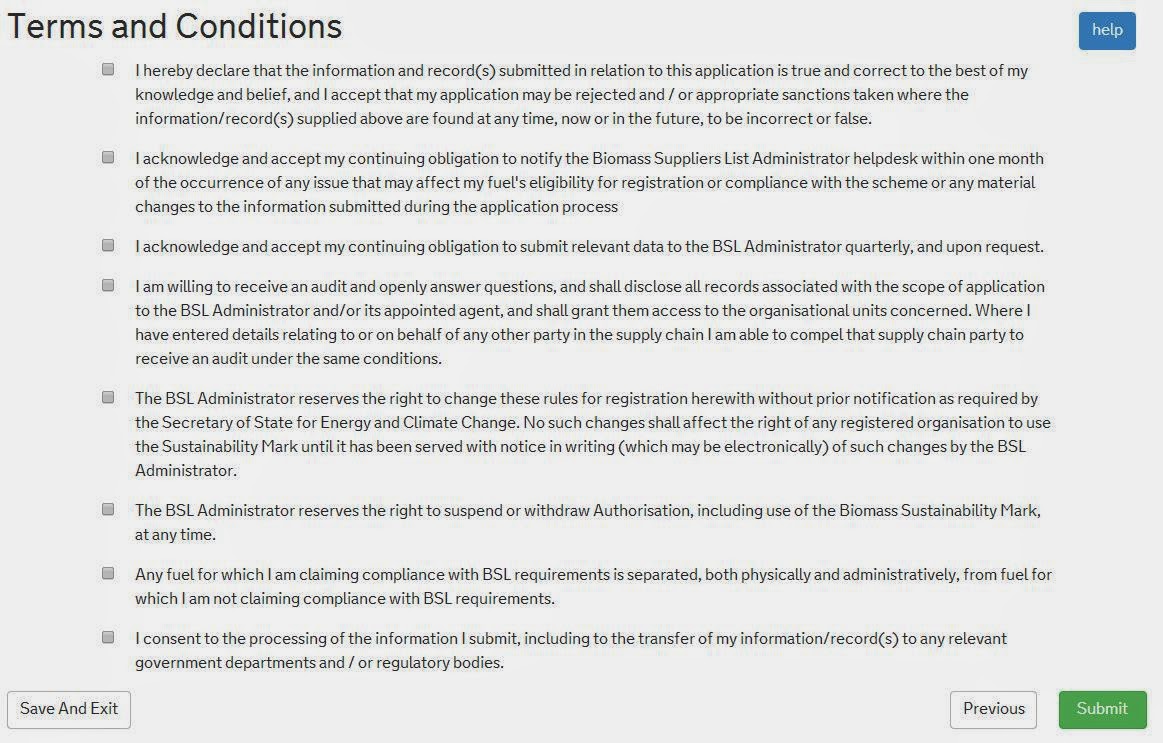
All applicants must agree to the scheme terms and conditions, which include requirements around reporting, agreement to be subject to periodic audits, and the provision of proofs of purchase in the form of invoices or receipts with information about the fuel on them.

How do I apply?

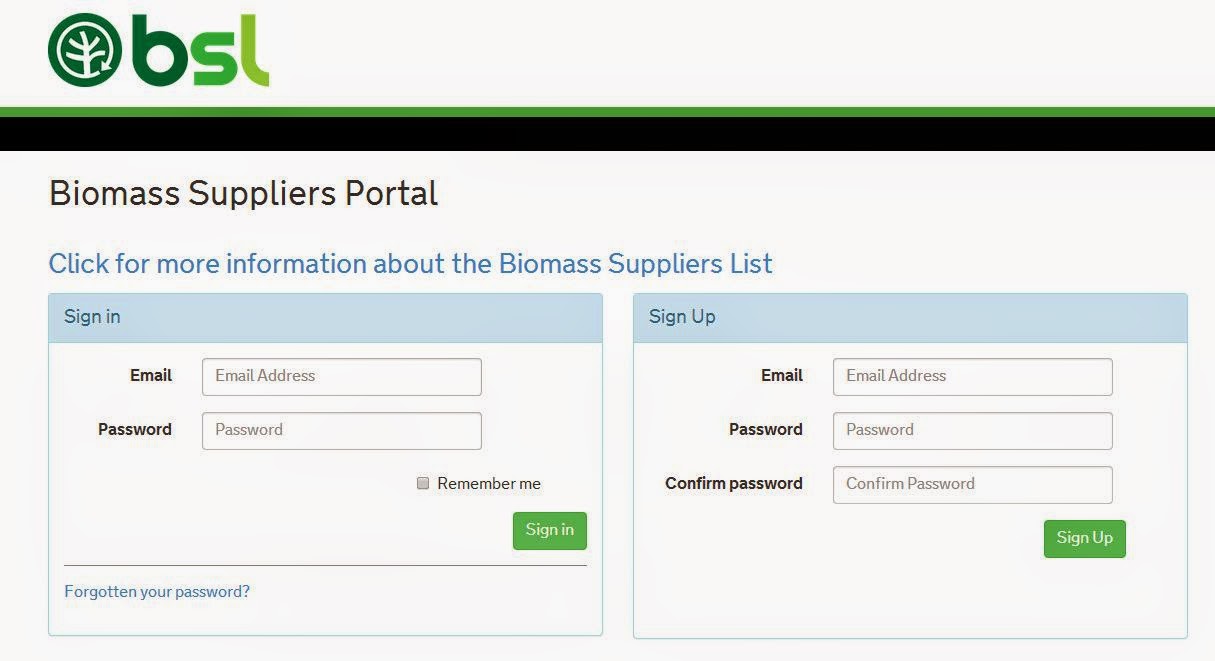
The application process is completed online at the new BSL portal.


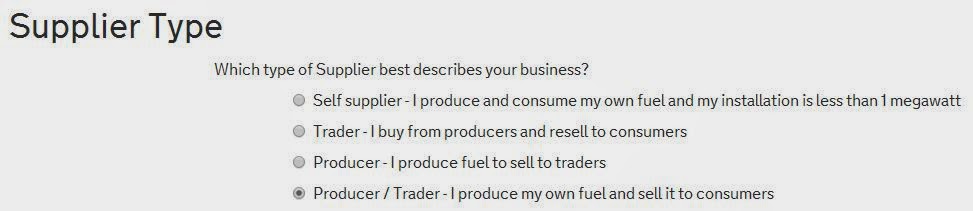
For users and self-suppliers the process is relatively simple.  After selecting the a supplier type applicants are required to respond to a set of questions (which vary according to the supplier type).


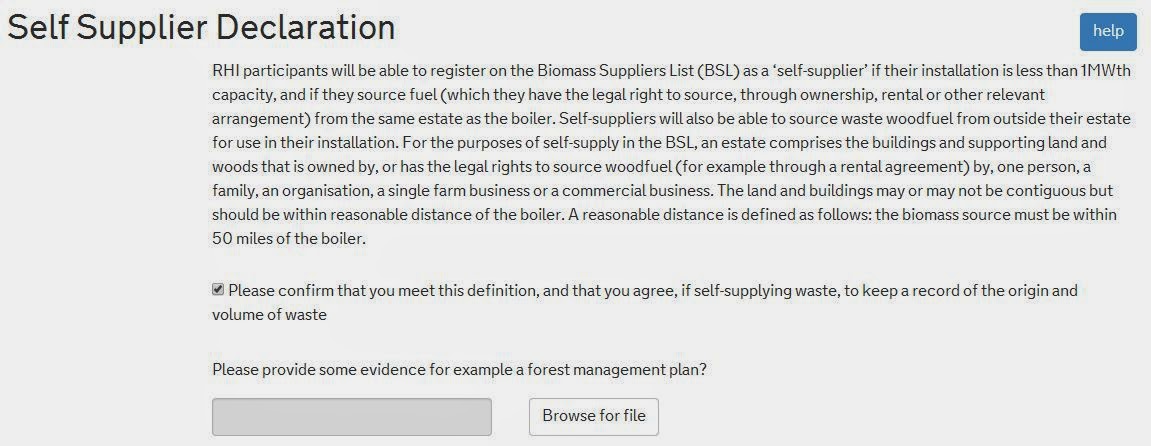
Self-suppliers, for example, are required to sign a declaration and upload a copy of a Forestry Commission approved management plan.


For traders and producers the process is a little more complicated and may require the completion and uploading of product data and carbon footprint calculations (via the B2C2 carbon calculator).


All applicants need to accept a set of terms and conditions that confirm acceptance of the scheme rules and which enables the BSL to undertake ongoing checks or audits.


The BSL FAQ is a good place to start.  Application guidance is also available on the BSL portal.

Overall we feel that the BSL is an appropriate method for accrediting and monitoring biomass fuels that are being used in publicly-funded biomass boilers.  

The BSL may initially appear to be bureaucratic but we are confident that most people will get to grips with it fairly easily.

Wednesday, 30 April 2014

New biomass sustainability requirements for the Renewable Heat Incentive

Ofgem has revealed more detail on how it intends to roll out and implement sustainability requirements for biomass fuels.

This is particularly important as it not only affects the owners and operators of RHI accredited biomass boilers but also producers and traders of biomass fuels.

The guidance applies to both the non-domestic (commercial) and domestic RHI and participants will need to comply with requirements from date they come into force (although the precise dates are not stated).

All participants are strongly encouraged to start sourcing from a supplier on the forthcoming Biomass Suppliers List (BSL) supplier in advance of the criteria coming into force later this year.

The new requirements also take into account participants who self-supply, for example an estate that processes wood chip from its own woodland.  Details on this can be found below.

From Autumn 2014 (no earlier than 1st October 2014)

Biomass fuel used by RHI participants must meet a lifecycle greenhouse gas (GHG) emissions target of 34.8g CO2 equivalent per MJ of heat.

Don't panic!  All this means is that the fuel (chip, logs, pellets) must achieve a 60% GHG saving against the EU fossil fuel average.  And it is the supplier of the fuel that has to demonstrate the GHG saving and not the end user (although the end user will have new reporting responsibilities if they are participating in the RHI).

From Spring 2015 (subject to the Parliamentary process)

Ofgem plans for biomass fuel to meet land criteria, which will differ for different types of biomass:
For woodfuel the criteria are outlined in the UK Timber Standard for Heat and Electricity.
How do non-domestic RHI participants comply?

This is rather simple actually.  A new Biomass Suppliers List (BSL) is currently being set up.  This is being managed by the good people at Woodsure who have been appointed by Ofgem to manage the BSL.  The alternative option is to self-report directly to Ofgem.

Participants can switch between these methods.  Of the two the BSL route sounds more straightforward to us.
  • Sourcing woodfuel from the Biomass Suppliers List (BSL)
    • Participants may still need to also provide Ofgem with a quarterly declaration that the biomass fuel they have used was sourced from a supplier registered on the BSL and marked as sustainable.
  • Self-reporting to Ofgem on the sustainability of their fuel
    • This will involve making a quarterly declaration to Ofgem of the lifecycle GHG emissions associated with each consignment of fuel used in that quarter, and provide an annual independent audit of the lifecycle GHG emissions associated with biomass used in that reporting year.
For the domestic RHI all fuel used from the date the criteria come into force must be sourced from a supplier registered on the BSL at the time the fuel was purchased. Participants are required to make an annual declaration to Ofgem that the biomass fuel used meets this requirement.

Self-suppliers (domestic and non-domestic) < 1 MW

Participants self-supplying woodfuel from the same estate as the installation will be able to register on the BSL as a self-supplier without undertaking an assessment against the sustainability criteria if the boiler is less than 1MW capacity

Ofgem recommendeds:
  • Self-suppliers provide some evidence of their ability to self-supply, such as a Forestry Commission approved management plan
  • Self-suppliers should register on the BSL before the sustainability criteria come into force in Autumn 2014.
Self-supplying participants who cannot meet all of their needs from their own woodland will be able to top up with fuel purchased from a BSL supplier.