Ofgem has announced that the small biomass tariff will be reduced by 5% from July 1st 2014.
This is in response to increasing uptake in the sub 200 kW category as well as higher than anticipated levels of eligible heat being submitted in meter readings.
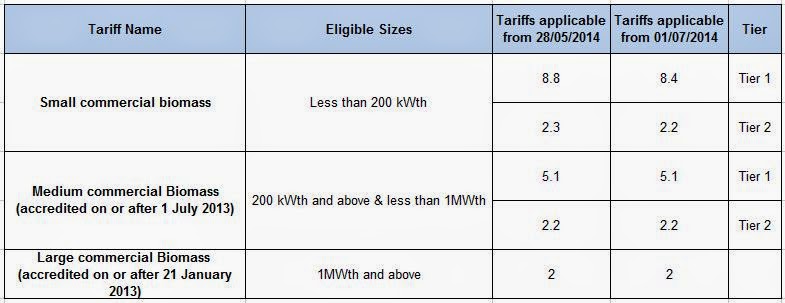
This degression of the small biomass category follows the annual inflation increase that took place on April 1st. This saw the tariff increase from 8.6 p/kWh (Tier 1) and 2.2 p/kWh (Tier 2) to 8.8 and 2.3 p/kWh, respectively.
The 5% reduction from July 1st will mean that the tariff falls again to 8.4 and 2.2 p/kWh (which is similar to the levels seen in 2012).
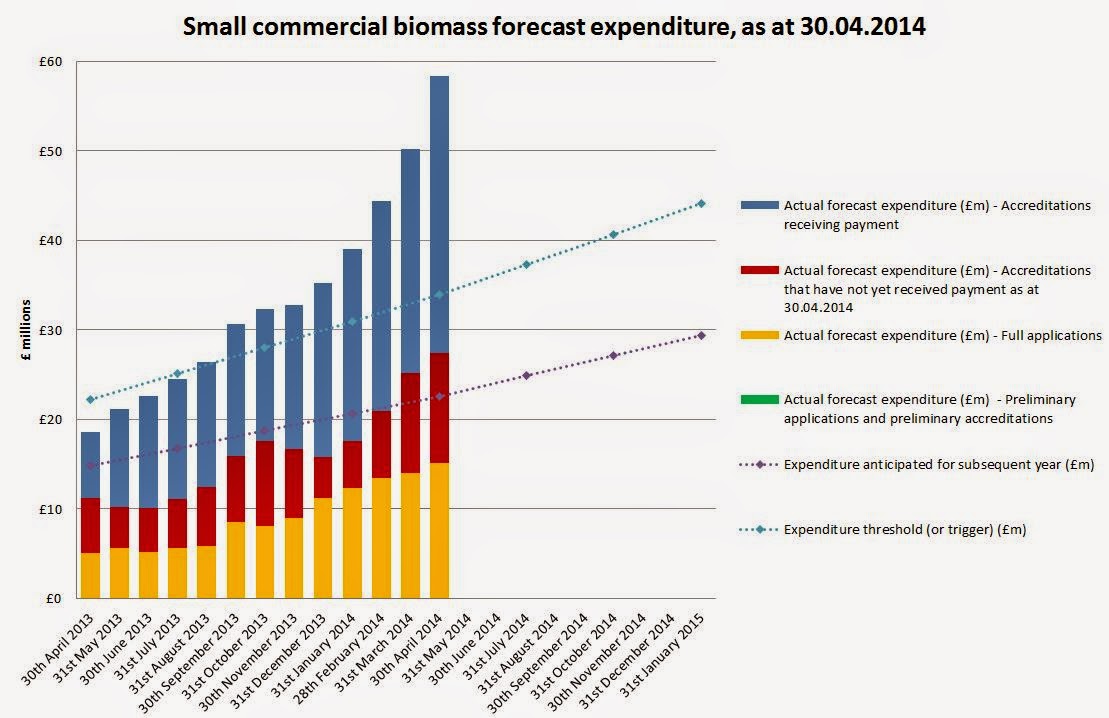
The latest uptake figures clearly indicate that whilst the RHI overall is operating within it budgets, uptake of the small biomass category has accelerated.
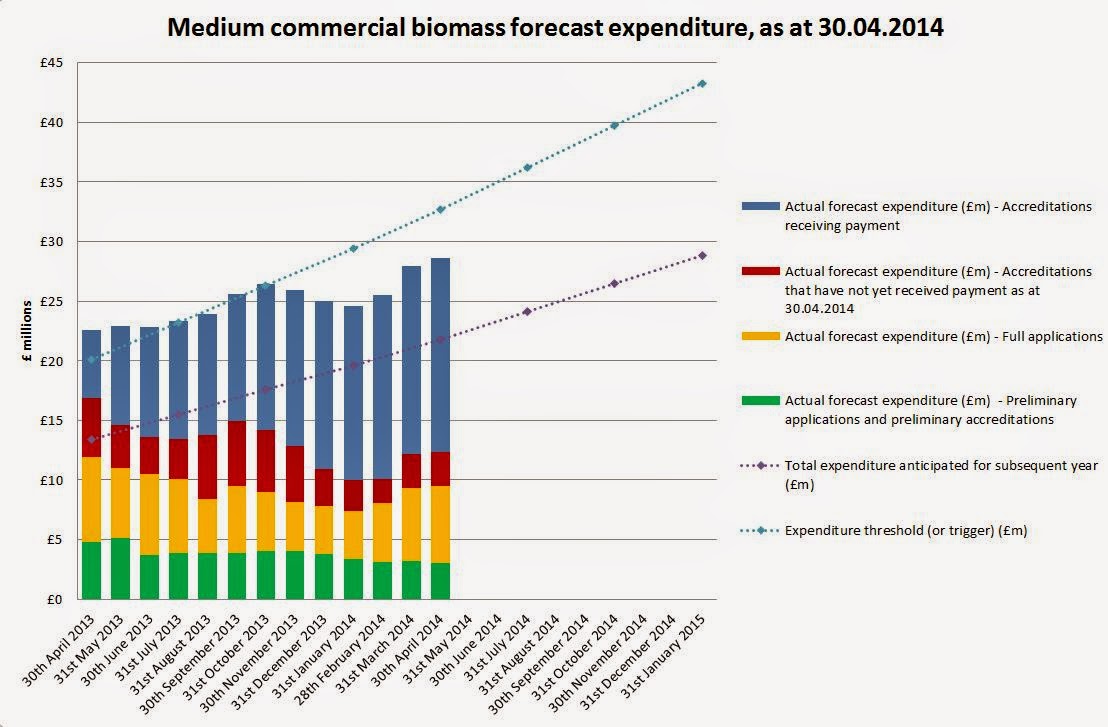
Meanwhile, uptake of the medium tariff remains strong but is currently operating below budget forecasts.
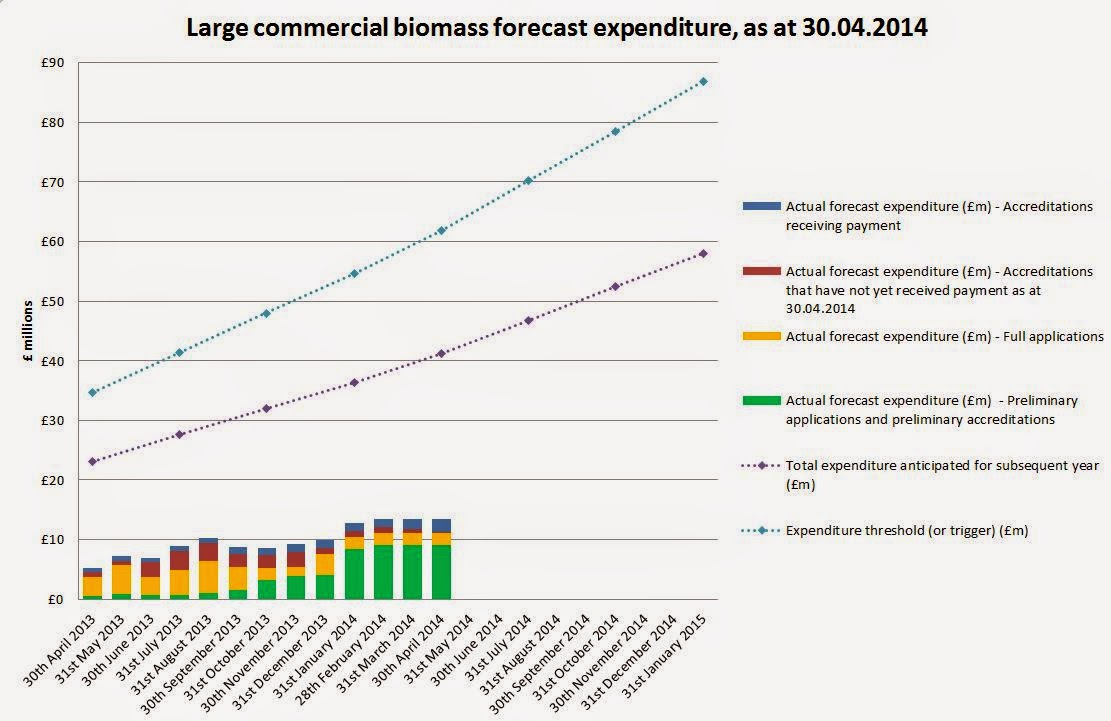
Activity in the large biomass tariff category is far lower than the other categories. However, there are clearly a number of schemes at pre-application stage (green column) and these may start to have greater impact on budgets over the next 24 months.
Overall biomass heating remains the clear 'winner' in the non-domestic RHI. The majority of the available budget (and installed capacity) is currently allocated to biomass technologies and activity in the other RHI-eligible technologies remains relatively modest.
A targeted package of support coordinated by the Kent Downs Area of Outstanding Natural Beauty (AONB) to support woodland owners and managers, biomass heating installers and fuel producers take full advantage of the expanding market for woodfuel.
Showing posts with label energy subsidies. Show all posts
Thursday, 26 June 2014
Friday, 22 February 2013
Update on Renewable Heat Incentive (RHI) - Feb 2013
Here is our latest snapshot on the progress being made by the Renewable Heat Incentive.
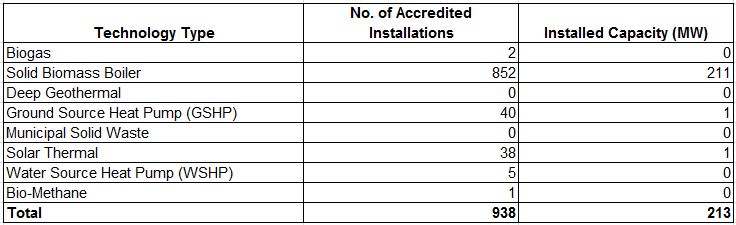
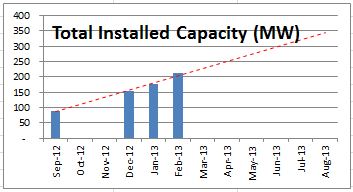
Total installations are now approaching 1,000. The first bio-gas and bio-methane installations are now online, including the country's first RHI accredited bio-methane plant at Poundbury on the Duchy of Cornwall estate. Installed capacity is now at 213 megawatts.
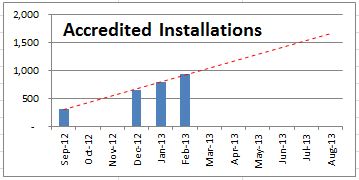
If we look at data from previous months we can see that the rate of uptake is steady and it has taken roughly five months for the number of accredited installations to double. This rate of progress, whilst modest, is probably a good thing for the scheme overall as more rapid acceleration (or sudden step changes) could affect Ofgem's ability to manage the scheme.
The red dotted line in the figures above and below is a simple linear trend line. At this stage the rate of progress remains steady and the scheme should reach 350 MW of installed capacity by August 2013.
The actual heat generation from the current installations is shown in the pie chart below. Biomass still accounts for the vast majority of all output.
Note that the single bio-methane installation (anaerobic digestion) is already the fifth largest heat generator - a hint at the enormous potential of this technology. It will be interesting to see how many bio-methane and bio-gas installations can be supported by the RHI given the fixed annual budgets and cost control mechanisms that are in place.
A video of the J V Energen plant at Poundbury can be viewed below. More information can be found here.
Subscribe to:
Posts (Atom)