 Firstly, more good news from Berties Woodfuel at Hadlow. Not content with winning 'Start up Business of the Year in the 2012' from Kent Excellence in Business Award Berties is now in the final stages of the Business Accelerators scheme. Our congratulations go to Peter and his team. More details can be found here.
 Estover Energy, has confirmed its plans to build a 10 MW biomass CHP (combined heat and power) on the former Pfizer site at Sandwich. The project at Discovery Park will provide around 10 MW of electricity and 20 MW of heat and will supply all of the heat and electricity needed on-site. It will also export power to the grid. Estover has already gained approval for two plants in Scotland and one in North East England.
 Estover's supply manager, Ben Heathcoat Amory, has provided us with a briefing on the Sandwich project and its likely implications for wood chip supply chains in Kent and Sussex.
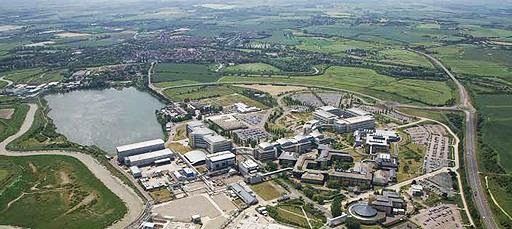 |
| Discovery Park - Sandwich |
Biomass plants are a bit like buses - they all arrive at the same time! In the same week that Estover announced their plans, STEAG New Energies announced that they have been given planning permission for a waste wood biomass CHP plant at Ridham Dock in Sittingbourne. The plant will produce 25MW of power and up to 10MW of heat.
The implications for biomass supply chains as a result of these new developments is potentially significant. The Estover plant will require around 100,000 tonnes of low-grade wood chip a year and the STEAG plant will burn approximately 160,000 tonnes of waste wood a year.
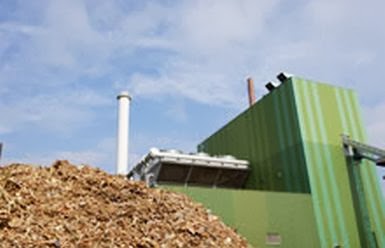 |
| STEAG biomass CHP plant |
The Pathfinder project will maintain contact with Estover with the aim of developing a programme of support for the supply-chain focusing on topics including sustainability, harvesting best practice, deer management and bio-security.
 Finally, we would like to remind readers about Ash dieback (Chalara Fraxinea). On various site visits recently we have noticed that many of the Ash woods are infected with Chalara, particularly those we have visited in the East Kent Downs.
 In addition to weak foliage in the canopy there is clear evidence of the disease in coppice re-growth, natural regeneration and recently planted sites (<10 years).
The latest information and guidance from the Forestry Commission can be found here.