Tuesday, 19 June 2012

RHI cost control mechanism announced


The Government consulted on how it might apply cost control mechanisms to the RHI in May.  The results have now been published and a summary is provided below.

The mechanism will work as follows:

  • The RHI would be suspended for the remainder of the financial year if the budget forecast suggests that the budget could be breached.  For 2012/13 no more than £70m should be spent on the RHI.  Spending more would be likely to exhaust next year’s budget through the cost of installations already receiving RHI funding, leading to a boom and bust approach.
  • Given the £70m cap, the cost control mechanism should suspend the scheme at 97% of the annual budget (£67.9m) with one week’s notice.
  • A weekly update will be provided on the DECC website setting out progress towards the suspension trigger, alongside a methodology used to calculate the forecast.  This will allow the market to make informed judgements about the likelihood of suspension.
  • Those installations that have already been approved will not be affected.
  • Applications made before the notice period will be processed as normal.
  • Applications made during the notice period will be processed if the installation has been commissioned before the suspension date.
  • Applications made after the suspension date will not be processed.


DECC currently estimates that RHI expenditure in 2012/13 will be around £42m.  While this amount could vary, weekly RHI application rates would need to increase by around 500% by the end of the year to reach £70m. Therefore, DECC sees the likelihood of suspending the scheme as low.

However, DECC acknowledges the high degree of uncertainty about how the market will respond to the RHI and has therefore introduced cost control procedures so it is prepared for unexpected changes in application rates (which is unlikely given that rapid cost reductions are unlikely in renewable heat technologies and also because there are significantly more barriers to the deployment of renewable heat).

As of 27 May 2012 Ofgem had received 533 applications (43 preliminary), had accredited 88 installations and rejected two (on account of these installations having received a grant).  There are concerns about the current backlog of applications for accreditation and Ofgem is working to resolve the delays via reallocation of staff resources and by reviewing approval processes.

A summary of the milestones for the RHI is shown below.


Woodland Creation Grant 2012 - up to £4,800 per hectare


A giant sequoia log, Sequoia National Park, California, undated, c1910
The Forestry Commission has issued some details of the Woodland Creation Grant 2012.

Expansion is a key priority of the Forestry Commission. Grant rates have increased, allowing a maximum of £4,800 per hectare, to provide greater incentive to achieve this.

All applications meeting UK Forestry Standard will be considered as eligible.  Further details on eligibility are provided in this year's Woodland Creation Grant (WCG) Guidance.

Grant rates

The basic planting grant for both broadleaves and conifers has increased by £1,000 per ha, providing a basic planting rate of £2,800 for broadleaves and £2,200 for conifers per ha. 

The overarching England Woodland Grant Scheme (EWGS) for new woodland has three elements that can be applied for, depending on the eligibility of both site and applicant: 
  • Woodland Creation Grant (WCG)This is the main grant that contributes to the costs of establishing new woodland.
  • Additional Contributions (AC)ACs increase the contribution towards the cost of establishing new woodlands that deliver specific priorities.
  • Farm Woodland Payments (FWP)These are compensation payments for agricultural income forgone when creating new woodlands on agricultural land.


Key priorities for the scheme relate to the value that trees and woodlands can play in support of:
  • Water Framework Directive (WFD)
  • The aims of Nature Improvement Areas (NIAs)
  • Offering permissive access in Priority Places
  • Creating, connecting or expanding native woodlands to 5 ha or more
  • Creating new conifer woodlands up to 3 times greater than previously restored native habitat.

For more details on the Woodland Creation Grant and associated grants please visit the relevant Forestry Commission web page here.

Monday, 21 May 2012

Practical workshop on woodland management planning and stakeholder engagement

Making the most of woodlands: Practical workshop on woodland management planning and stakeholder engagement

The Sylva Foundation, BioRegional and the Forestry Commission warmly invite you to attend this free event which aims to help you identify and realise the opportunities which exist from managing your woodlands. 

This event will take place in the following locations:
If you would like to register for your free place at either one of these events, please so do by following the relevant link below:
Event details:

Well-managed  woodlands can potentially provide you with a host of benefits and opportunities. This event will support you in working with your woodland by:
  • Identifying  possible markets for your woodland products with a session on producing for the woodfuel market.
  • Introducing free tools and resources to help you manage your woodlands.
  • A practical interactive session in the afternoon to demonstrate their use.
Experts will be on hand to advise you on aspects of management such as surveying and increasing the productivity of your woodlands.

The day will include the launch of a new resource to help in your engagement with your local community and other stakeholders who you may need to deal with through your woodland work, and as part of the process of developing an UK Woodland Assurance Standard management plan.

The new guidance pack and free promotional materials will help to guide you through this process, and a local woodland owner will be there to offer their first hand experience.

Friday, 18 May 2012

Invitation to view Econergy biomass installation

Econergy will be holding a seminar at the Valley Park Community School on the 8th June to discuss wood heating solutions and demonstrate the Froling wood chip boiler installed at the venue.

Learn how this installation has provided four years of sophisticated low carbon heating for the school, visit a working wood boiler and learn how to progress your own wood heating project with an Econergy advisor.
  • 9.30-10.00 Arrive with coffee
  • 10.00-10.20 Econergy introduction to wood heating and the Renewable Heat Incentive
  • 10.20-10.40 From idea to completion – how to develop your wood heating project
  • 10.40-11.00 Questions and Answers
  • 11.00-11.30 Tour of the boiler
  • 11.30-13.00 lunch and finish
Places are limited so book early to avoid disappointment.  Send an email to confirm if you wish to attend to dawn.riggett@econergy.ltd.uk.  

The school is located at Huntsman Lane, Maidstone, ME14 5DT.

More details on Froling boilers and Econergy installations using this product can be found here.


Froling Turbomat


IMPORTANT NOTICE - STOLEN CHAINSAWS & HEDGE CUTTERS

Please be alert for anyone selling any CHAINSAWS or HEDGE CUTTERS in the mid/east Kent area.  These items have been STOLEN.  They were taken from the Dover/Canterbury area.

It is believed the thief may be driving a BLUE/PURPLE VAUXHALL CORSA.  He has been spotted in the ASHFORD area trying to sell the stolen items.  Please remain vigilant and obtain any details possible should you see/come across this individual (Vehicle Registration, visual description, age etc...).

If you have any information or details relating to this theft please contact the police.  I would also be grateful if you could let me know directly.

Please also circulate this information to anyone else who may be able to help catch this thief.

I gratefully appreciate your help on this.
Many thanks,
Kent Downs and Marshes LEADER Project
01622 221389

Tuesday, 15 May 2012

Farming and Forestry Improvement Scheme (FFIS)

The FFIS is part of the Rural Development Programme forEngland (RDPE) and is a scheme of support, developed to help farming, forestry and horticultural businesses in England to become more efficient at using resources.

This scheme aims to help make your business more profitable and resilient whilst reducing the impact of farming on the environment.

There is £20m available under FFIS until December 2013. The grants are for capital items and the grant rate available is up to 40% in non upland areas, and up to 50% in upland areas and the maximum grant allowable per project is £25 000. The minimum grant is £2,500.
What can be funded under FFIS?

To be eligible for funding under FFIS the project must fall within one of the following key areas of activity:
  • Forestry: Projects which improve the economic value of forests through the efficiencies of improved processing and adding value. Eligible items include timber processors, forwarders, forestry trailers, tractor mounted forestry grabs. 
  • Nutrient Management: Improvements in use of farm manures and slurries so as to improve soil quality and reduce reliance on artificial fertiliser.  Eligible items include slurry injectors, mechanical slurry separation systems and Global Positioning Systems.
  • Energy Efficiency: Projects to reduce or recover energy use on farm resulting in a reduction of farm energy bills and carbon dioxide emissions.  Eligible items include heat exchangers, gel coolers and ice builders.
  • Water Resource Management: Rainwater harvesting, recycling and reuse systems to reduce reliance on mains water.  Eligible items include pipework specifically to intercept and divert roof water to a storage facility, rainwater harvesting equipment.
  • Animal Health and Welfare: Projects which bring about significant improvements in farm animal health and welfare.
Who can Apply?
Farmers, foresters, contractors and horticulturalists across England are eligible to apply

How to apply
The application form will go live on the 16th November when the first round opens. In the meantime you are strongly advised to read the guidance in the handbook as there is some preparatory work you will need to do before you can apply.

If you wish to discuss your proposal before completing the forms or if the item you are applying for is not listed in the guidance then please contact your local Defra RDPE Delivery Team. (0300 numbers are charged at a local rate)
Completed application forms will only be accepted if submitted during an open round. The 1st round of the scheme is open from 16 November 2011 until 17 January 2012.

The selection process for FFIS is competitive and applications will be appraised against one another. This means that there is no guarantee of success and not all projects which are eligible will be awarded a grant.

Wednesday, 9 May 2012

Fuelwood open days


Fuelwood are holding two open days (May 25th and 26th at Claywood, Warwickshire) to demonstrate their full range of machinery, which includes:
  • New Sami – Autochopper
  • New Splitta 400
  • Woodcutta & Splitta Fuelwood Factory logs & kindling
  • Transaw 350 XL – Firewood Processor
  • KindletPro & Kindlet – kindling machine
  • New 2012 Japa Firewood processors models
  • Full range of log splitters
  • Plus accessories - log decks, bagging chutes etc
  • New X-Frame Bagga for 1m3 Log bags
Fuelwood are also distributors of Heizohack chippers.

To register please visit Fuelwood's website.

To read a report from Fuelwood's recent event in Kent at Berscoe Engineering, who are a local distributor of Fuelwood's products, please click here.

Massive jobs and business boost for East Kent

Local businesses will be able to apply for interest-free loans provided they have plans to grow their company and employ more people, after Kent County Council launched a massive £40 million Government-backed scheme to boost the East Kent economy.

Kent County Council will lead the delivery of ‘Expansion East Kent’ – with the aim of creating 5,000 new jobs by offering local firms in Thanet, Dover, Shepway and Canterbury £35 million in loans. The project is supported by the Government's Regional Growth Fund.

The remaining £5 million will be invested in rail line speed enhancements to reduce travel times from London to Ramsgate to around 1 hour, further benefitting business and tourism in the area and placing Manston airport on the map.

An audience of business leaders and entrepreneurs on Friday (27 April) packed the Winter Gardens, in Margate, to learn more about Expansion East Kent.

Leader of Kent County Council, Paul Carter, said:

“This is a tremendous boost for the East Kent economy. Expansion East Kent is an ambitious programme to create thousands of new jobs by developing the private sector business base, counteracting the effects of recent economic shocks in the area.

“The programme also aims to unlock private sector finance, stimulating more than £300 million in associated investment over the course of the next four years and creating a major driver for the East Kent economy.

“Since Pfizer’s announcement to exit from its site last year, we’ve left no stone unturned trying to support current business, develop new opportunities and lay down a solid foundation for growth.

“Expansion East Kent will provide financial support to firms as interest free loans. This intelligent use of funding means we can recycle the money to provide vital business support on an on-going basis, benefitting local firms and creating local jobs for years to come.

“Expansion East Kent is being delivered by Kent County Council. We will bear the administration costs, which means it will be run at zero cost to business.”

Almost all business sectors in East Kent – and those locating or looking to expand into the area – can potentially benefit from the scheme.

Mr Carter added:

“We want to encourage applications from sectors where new investment is particularly important and can yield significant economic benefits, for example manufacturing, advanced engineering, tourism, life sciences and greentech industries. This significantly builds on our work to help market and promote the Discovery Park Enterprise Zone in Sandwich and will have an impact across the whole of East Kent.”

South Thanet MP, Laura Sandys, said:

“The Regional Growth Fund offers unrivalled opportunities for East Kent. Unlike previous Government backed schemes, £35 million of the Fund will go directly into supporting businesses to expand, create new local jobs and recruit staff. By providing interest free loans, it is not a quick cash injection but a long term sustainable solution to ensure our local business community and jobs market thrives into the future. Securing the Regional Growth Fund is a huge victory – particularly for the Thanet and Sandwich corridor.”

To find out more about Expansion East Kent and for full details of the application process, please visit: www.kent.gov.uk/expansion.

Moving towards low carbon farming


To book your place or for more information please call the Soil Association 0117 314 5127 or email pjohnson@soilassociation.org.

The Kent Downs Woodfuel Pathfinder would be happy to assist anyone considering biomass heating as a way of reducing on farm energy use. 

For free advice and support please contact Matthew Morris on 01303 815 171 or matthew.morris@kentdowns.org.uk.

Tuesday, 24 April 2012

Kent Wildlife Trust - free courses

Please find below details of some free courses for landowners which are being organised by the Kent Wildlife Trust over the next few months.

Management of Small Woodlands
16th May – Sandling, Maidstone and Bredhurst Woods – 10am to 3.30pm

Bredhurst Woods is one of the largest blocks of ancient woodland in the Kent Downs Area of Outstanding Natural Beauty (AONB). Similarly to Boxley, it has suffered considerable neglect and misuse in the past, but has been much improved in recent years. 
More details can be found on the Mid Kent Downs Countryside Project and the Bredhurst Woodland Action Group (BWAG) websites. 
BWAG are also now offering firewood for sale for people within 6 miles of the woods - see the logs section on their website.
As a guide to the incredible work that has already been done within these woods please take a look at the gallery section on the BWAG website...a picture paints a thousand words!
Management of Chalk Grassland
12th June – Kemsing, near Sevenoaks and Kemsing Nature Reserve – 10am to 3.30pm

Management of Small Pastures
27th July – Tyland Barn, near Maidstone and a local farm. 10am to 3.30pm

For further information about these courses and to book, please email tania.avard@kentwildlife.org.uk or camilla.blackburn@kentwildlife.org.uk.

Monday, 23 April 2012

Lincolnshire farming estate could use its crops to fuel £200k biomass heater

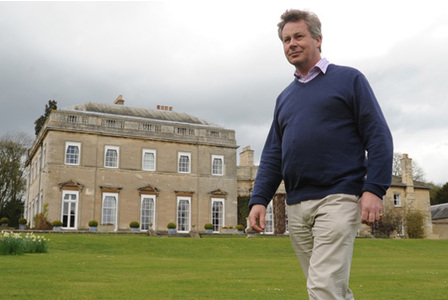
William Cracroft-Eley of Hackthorn Hall
A Lincolnshire farming estate could use crops grown on its land to fuel its own £200,000 biomass heating system.

The owner of Hackthorn Hall, north of Lincoln, hopes to build multiple mini-district heating systems in the grounds.

An application for the technology is currently being considered by West Lindsey District Council.

The installation is being handled by Cedar Farm Developments.

This is an interesting case study for the Pathfinder project which has supported several estates in Kent that appear to be a similar scale to Hackthorn Hall.

What is also of interest is the use of multiple biomass systems, three in total, that will serve seven different buildings on the estate.  The fuel will be pelletised miscanthus, a well-established biomass fuel crop on the estate that extends to around 300 acres.


Tree planting good for cereal yields


Picture courtesy of Mike Townsend

A new report commissioned by the Woodland Trust and written by Harper Adams University highlights the value of tree shelter belts to farmers in combating the effects of drought.

The report, Managing the drought - A review of the evidence of the benefits of native trees species for shelter on the water regime of pasture and arable crops, pulls together studies from UK and other temperate agriculture systems to show how trees planted as shelter belts help to reduce wind speeds, meaning water loss through evapotranspiration is slowed. This allows the sheltered crop to retain more water and use it efficiently.
In the UK such shelter belts are relatively uncommon, but studies have shown cereal yields of sheltered crops can be higher than that for unsheltered crops, particularly in years when the weather is hot and dry.

Mike Townsend, Woodland Trust Conservation Advisor said, "This report makes it clear that tree shelter belts could be of real value in the development of sustainable agriculture, especially as we face a changing climate and growing demand for food.
"Naturally, trees will compete for water and nutrients, reducing crop yields directly adjacent to the shelter belt. However, these reductions typically only occur up to a distance of one to two tree heights away. Any loss after that point is significantly outweighed by the increase in yield achieved by more efficient water use.

"More research is needed, but this is promising start and shows that good farmers should indeed consider planting more trees." 
Read Mike Townsend's blog for more detail on the report.

Friday, 13 April 2012

Royal Forestry Society - Hucking Estate free event

Thursday, 12 April 2012

Bersco Engineering Open Day

Bersco Engineering, based on the Lympne Industrial Estate near Hythe, is an engineering company specialising in diesel and hydraulic servicing for a range of vehicles, including agricultural and forestry equipment.

The latest addition to their portfolio of services is a new partnership with Fuelwood (Warwick) Ltd which acts as a national importer/distributor of specialised woodfuel processing equipment.

As a result of this new relationship there is now a local supplier of high quality equipment, including Heizohack (chippers), Japa and Sami (log processors), Woodline (log splitters), LucasMill (portable saw mills), MOWI (trailers and cranes) and Fuelwoods own range of British manufactured kindling and log machines (Transaw, Splitta and Kindlet).

I attended Bersco's recent open day and met with owner Robert who was pleased with the good turn out.  There was a good mix of existing customers as well as some seasoned woodsmen who paid close attention to the demonstrations led by Jeremy from Fuelwood Ltd.  The hog roast also helped proceedings, as did the umpteen cups of tea provided by Leanne's team!

Fuelwood's Jeremy discussing kindling during a tea break
The Sami log processor was certainly an impressive piece of kit.  The model being demonstrated, the S185-TEC440, is not cheap at almost £30,000, but it made short work of some fairly large pieces of timber.  What was most impressive was the automatic sensors that scan the timer dimensions as it enters the machine and alters the cutting length and height of the splitter blade automatically.  This means that timer with a variety of dimensions can be fed into the machine without the operator having to alter the set-up each time.  The hydraulic log lift was another feature that was new to me.

The Kindlet machine was more familiar to me but I was impressed again at the ease with which it produces a consistent product.  According to Jeremy the PTO version can process up to 100 bags an hour...not bad considering the average price of a bag of kindling these days!

The SAMI log processor (PTO or 3-phase)

Also good for leaning on
The NET result...ahem

The Kindlet - Made in Britain


The SAMI log conveyor


Free workshop: Discovering Ancient Woodland

Monday, 2 April 2012

RHI: consultation on interim cost control

DECC has launched a consultation on possible approaches to cost control for the RHI.

The document focuses on the amount of notice that would be provided and is largely informed by the difficulties that were caused by short-notice changes to the Feed in Tariff.  The proposals range from one month, one week and no notice.
The document also clarifies the structure of the RHI budget.  It is interesting to note that each year has a fixed budget and any underspend will not be carried over to the next year. 
As of 18th March 2012 298 applications hd been received, of which only 11 have been accredited.  Based on the current level DECC expects that spend in 2011/12 will be approximately £2m, which is somewhat short of the £56m allocated to 2011/12 (although this includes £25m for RHPP Phase 2).
Based on this uptake DECC suggests that the proposed interim cost control measure would not be needed and suspension would not occur.
However, based on our recent interaction with installers there is likely to be a step-change in the number of new applications over the next quarter as both new systems and post July-2009 projects are submitted.
Annual RHI budget (Source: DECC)
Predicted budget allocations for 2012/13 are:
  • £15m - from installations already accredited
  • £40m - new installations coming on stream


The main points from the consultation are as follows:
  • The Renewable Heat Incentive continues to be a top priority for Government as a means to reduce our carbon emissions and because it is central to delivering our strategic framework for heat. It is therefore essential that the RHI policy is sustainable and that we have the ability to ensure that year to year spending does not exceed available funding.
  • This consultation sets out a proposed interim cost control measure that would suspend the RHI until the next financial year should estimated spending reach a level where the budget could be breached.
  • Only new applications would be affected. Accredited installations already receiving the RHI tariff from Ofgem would continue to receive that tariff. Applications submitted to Ofgem prior to the suspension would be processed as normal.
  • Current application levels are low relative to the available budget and if these levels were to continue the proposed interim cost control measure is unlikely to be needed. However, there is a high degree of uncertainty about how the market will respond and we need to be prepared for unexpected changes in uptake. Having this interim approach set out in advance will ensure that Government is able to respond quickly if required and that stakeholders will be sighted on future action.
  • The proposed circumstances under which suspension would occur will be specified in the RHI regulations and will include a predetermined trigger that would set off suspension and a fixed notice period before the suspension begins.
  • We intend to frequently publish the data being used to monitor progress towards the trigger. This will allow the market to make informed decisions about the likelihood of suspension.
  • We are proposing this policy as an interim measure. Over summer we plan to consult on a longer-term flexible degression-based mechanism which would automatically reduce tariffs should spending against the overall budget or deployment of certain technologies exceed forecasts.

Friday, 30 March 2012

Renewable Heat grant scheme extended

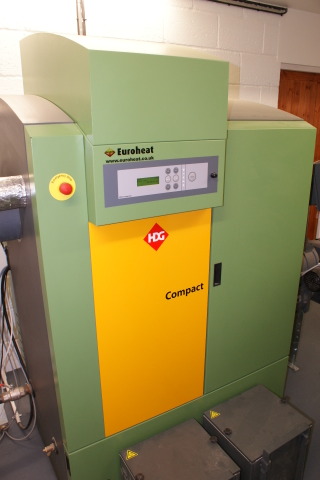
HDG chip boiler installed by North Downs Wood and Heat
On 26 March, DECC announced a second phase to the Renewable Heat Premium Payment scheme, which will provide further short term support for installations of renewable heat technologies in the household sector.

The new phase of the scheme will run in Great Britain and again focus on houses not heated by mains gas. As with phase 1, there will be two parts to the scheme: a voucher for private householders and a competition for social landlords. Consideration is being given to the introduction of a Community Competition.

Statistics for the RHPP indicate that 785 biomass boiler grants have already been issued.   The second phase of the scheme, worth £25m (£10m more than the first phase), should provide even greater support for the installation of renewable heat technologies in the household sector.

The RHPP runs in parallel with the Renewable Heat Incentive (RHI), the World's first financial incentive for renewable heat.  This is open for commercial heat installations (which includes multiple domestic properties connected to a central biomass boiler).

RHPP Phase 1

This phase of the scheme will run until 30 March 2012. Applicants should note that the on-line application form will be removed from the Energy Saving Trust website during working hours on 30th March 2012. Regardless of when customers applied for or received their voucher, and in order to be eligible to receive their grant, all completed claims must arrive at the address printed on the voucher (Energy Saving Trust, Edinburgh) before midnight on 31st March 2012.

As part of the scheme, DECC and EST ran a competition for social housing providers to part-fund projects to install renewable heating. See below for a list of the winners who were awarded funding.

RHPP Phase 2

Under the new voucher scheme, homes not heated by mains gas will be able to apply for grants for air-to-water-source and ground and water source heat pumps, biomass boilers and solar thermal. All householders can apply for grants for solar thermal. There are minimum energy efficiency criteria, and householders must agree to complete customer questionnaires, as well as making provision for the installation of a meter to monitor their energy use and performance of their heating system.


Asian Longhorn Beetle found in Kent

Asian Longhorn Beetle
An outbreak of the Asian longhorn beetle (ALB), an exotic beetle pest which could have severe consequences for British trees, has been found in Kent, the Food & Environment Research Agency (Fera) confirmed today.

This is the first time an outbreak of this pest has been found in the UK, and it is being treated extremely seriously. Fera and the Forestry Commission are taking urgent steps to try to eradicate the outbreak before it has the chance to spread further afield.

Several larvae of the beetle were found inside a poplar tree during a routine survey by the Forestry Commission at a site in the Paddock Wood area. Scientists from the Commission's Forest Research agency had been monitoring an area around the site where an adult beetle had been found in 2009, and this is the first evidence of infestation. It is thought the beetles originated from wood packaging used to import stone from China at an adjacent industrial site.

The beetle is not native to the UK, and poses a serious threat to a wide range of broadleaved trees and shrubs such as maple (including sycamore), elm, horse chestnut, willow, poplar, birch and some fruit trees.

Speaking about action to eradicate the outbreak, Martin Ward, Head of Plant Health Policy at Fera, said,

“Our plant health inspectors and the Forestry Commission are conducting a survey to determine the extent of this outbreak. They will be contacting all those within the survey area over the next few days and weeks with a view to inspecting all potential host trees for signs of the beetle. In the meantime we would urge members of the public, local businesses and landowners to be on the alert for the beetle and let us know if they find anything.”
Adult beetles are large (about 20 - 40 mm long) and shiny black with variable white markings. Their antennae are particularly distinctive, being much longer than their bodies (up to twice the body length) and are black with white or light blue bands. The larvae of the beetle feed undetected on the inside of the plant, and can kill it or leave it weakened and susceptible to further pest and disease damage.
The most obvious symptoms of ALB damage are the circular adult exit holes, which are about 10 mm in diameter and are generally found in the main trunk and above. The adult beetles usually emerge from these holes between May and October.
Dr John Morgan, Head of the Forestry Commission's Plant Health Service, said,
“It’s difficult to say exactly what measures will need to be taken until we have completed the initial survey work to determine the extent of the outbreak. However, we will need to remove any trees found to be infested, and it is possible that we will need to remove potential host trees around the original site as a precautionary measure. Eradication measures to treat outbreaks in the US and Italy have resulted in the loss of tens of thousands of mature trees.”
Anyone who suspects they have seen an Asian longhorn beetle, or evidence of its presence, should contact the Fera Plant Health Helpline on 0844 248 0071 or email planthealth.info@fera.gsi.gov.uk If possible, the beetle should be caught and placed in a secure container so that an inspector can collect it. The beetles are not harmful to humans, although they should be handled with caution because they can nip the skin.
More-detailed information about ALB can be found on the Forestry Commission’s website.

High domestic fuel prices blamed for rise in theft of harvested wood

Try getting these in the back of the family hatchback!

The theft of harvested timber from woodlands is not a new phenomenon, but these recent BBC news items from Somerset and Gloucestershire perhaps hint at a growing problem.  Reports from Greece add more evidence to the clear relationship between illegal forestry, depressed economies and high fuel prices.

Another factor may be the inexorable rise in the use of wood stoves.  The Stove Industries Alliance, the body that represents stove manufacturers and distributors in the UK, estimate that around 150,000 wood stoves have been installed each year for the last four years.  This has already led to a significant increase in demand for firewood (and the firewood industry has rightly responded with strong investment in new equipment and facilities).

But given the increase in the cost of firewood, and more significantly the huge increases in oil and gas prices, it is not surprising that some people may view their local woodlands as a prime source of free fuel.

The BBC articles suggest that the problem can extend up to 400m into a woodland.  In some cases illegal loggers are using chainsaws and large vehicles (20 tonnes in one night in one case).

We are not aware of any significant problems in Kent at the moment...but please do get in touch if you hear of anything and we will highlight any problems on this blog.

Monday, 12 March 2012

Woodfuel Pathfinder featured on BBC Countryfile

In case you missed the most recent episode of the Countryfile, and the feature on coppice management and woodfuel, you can see it here on the BCC iPlayer: Countryfile March 11th 2012.
The venue was Torry Hill Fencing, a business that clearly demonstrates how good woodland management can yield a range of benefits.

It was also pleasing to see that the only waste product from the process, the bark that is removed from the chestnut lengths before they are split for pailings, can be used as goat feed (which was a somewhat unexpected by-product from a morning's filming with Matt Baker)!