Wednesday, 27 August 2014

Small Woods Association - Skill Sharing weekend 12-14th September 2014

The Small Woods Association has just released details on its 2014 skill sharing weekend.

The event will take place at the Woodland Enterprise Centre at Flimwell in East Sussex from Friday 12th to Sunday 14th September.

The event will include:

  • Two keynote speakers
    • Alison Field (Forestry Commission Regional Director for the South East) who will talk on the future for woodlands in the region, the impact of tree diseases and the changes in grants.
    • Tim Rowland (Future Trees Trust) will talk about their work in improving the planting stock of broadleaved trees so as to enhance the social, economic and environmental benefits that they offer.
  • Lectures and workshops on selling timber, woodland management problems, tool sharpening and a range of greenwood and coppice crafts
  • A session on woodland first aid
  • A tour of the managed woodlands at Flimwell
  • Foresters Question Time
  • Lunch on the Saturday, with a barbeque and social in the evening
  • A quiz and film show on arrival on the Friday.
  • Camping space is available free of charge, or we can advise on accommodation locally.
  • And last (but not least!) the Small Woods Association AGM.

The cost for the weekend will be £42 for Members, and £48 for members guests.  For more details and to book please visit the SWA website.

Members are welcome to attend for the AGM business ONLY free of charge - please contact philtidey@smallwoods.org.uk)

Friday, 22 August 2014

Lucas Mill - Fuelwood Case Study & Video

Those lovely people at Fuelwood have just created a new case study and video for the Lucas Mill - a portable saw mill that can be set up around a felled tree.


More videos can be found here.

Whilst on the subject of machinery Fuelwood has an interesting selection of ex-demo and second hand equipment - take a look here.

Finally, we should draw your attention to APF2014 which will take place at the Ragley Estate (Warwickshire) on the 18th to 20th September.

Thursday, 21 August 2014

RHI - biomass sustainability and Biomass Suppliers List (BSL)

Over the last few weeks we have received several emails from DECC regarding their policy for biomass sustainability that it applies to renewable energy subsidy schemes including the Renewable Heat Incentive (RHI) and Renewables Obligation (RO).

Given the volume of reading required to keep up with all of the recent announcements we have attempted a summary to enable readers to locate some of the important documents.

First up is the Biomass sustainability policy Q&A that was released following the consultation workshops that took place in London.  This is well worth a read as it neatly summarises some key questions as well as confirming the following:
  • Introduction of the greenhouse gas and land criteria in the RHI/RO biomass sustainability policy will now be introduced from Spring 2015.
  • Non-domestic RHI participants will have two methods of demonstrating compliance with the forthcoming sustainability criteria:
These 'criteria' are:

  • GHG criteria: Biomass fuel used by RHI participants must meet a lifecycle greenhouse gas (GHG) emissions target of 34.8g CO2 equivalent per MJ of heat, or 60% GHG savings against the EU fossil fuel average.
  • Land Criteria: For woodfuel the criteria are outlined in the UK Timber Standard for Heat and Electricity.
Woodfuel meets the Timber Standard for Heat & Electricity if it "...originates from an independently verifiable legal and sustainable source and appropriate documentation is provided to prove it."

Currently this documentation is obtained via one of two routes:
  • Category A: Evidence that the woodfuel originates from a legal and sustainable source can be provided through the use of independent certification of the wood by a recognised forest certification scheme (e.g. FSC, PEFC).
  • Category B: Evidence that the woodfuel originates from a legal and sustainable source can also be provided in the form of alternative/bespoke documentary evidence that provides sufficient assurance that the source of the wood is legal and sustainable (e.g. via a supplier registered on the BSL or via self-reporting - for more details click here).

Summary of post consultation decisions

Some changes have been introduce following the consultation and feedback received during workshops.  These changes are as follows:

  • New requirements to report on the proportion of ‘hardwood’ and ‘softwood’. There will be an additional requirement to report on whether any of the wood used was likely to have come from threatened or protected species.
  • Arboricultural residues will be deemed sustainable under the Timber Standard for the RO and RHI.
  • Not to exempt wood from diseased trees from the Timber Standard.   
  • To “deem sustainable” under the Timber Standard, trees removed from non-forest land for ecological reasons.
  • Not to exempt wind blow from the Timber Standard at this stage but to keep the evidence under review.
  • Not to exempt non-waste residues from sawmills from the Timber Standard.
  • To add ‘highly biodiverse grasslands’ to the list of protected land types in the land criteria for non-wood solid and gaseous biomass.
Copies of the original consultation document and Government Response can be can be viewed on the DECC website.

Further reading:


BSL guidance and Q & A 

UK Timber Standard for Heat and Electricity

DECC February 2013 Government Response document, announcing RHI sustainability criteria 

DECC December 2013 Government Response document, providing an update on RHI sustainability criteria

Ofgem Renewables Obligation sustainability guidance

EU 2010 Report on biomass sustainability

Tuesday, 12 August 2014

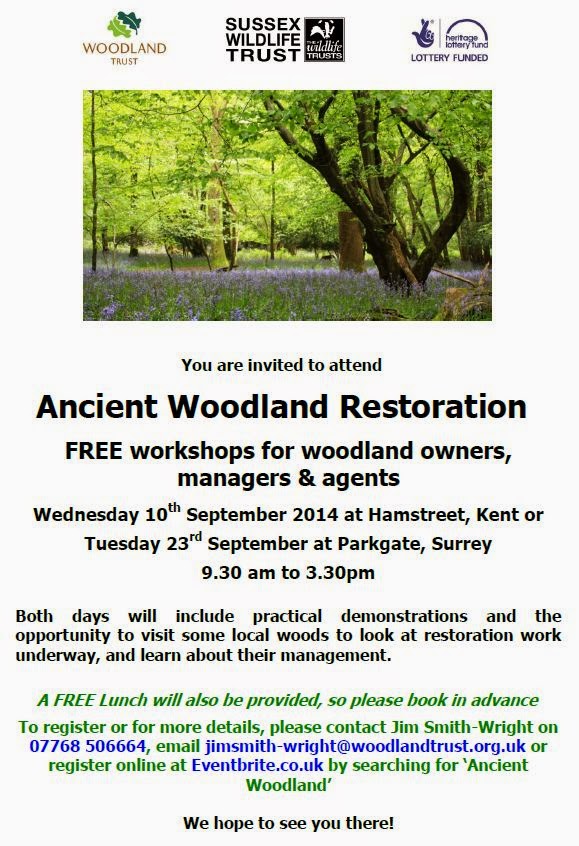
Ancient Woodland Restoration - FREE workshops


Monday, 11 August 2014

Renewable Heat Incentive - latest uptake figures from DECC

The latest RHI figures continue to demonstrate how successful the scheme has been at increasing the rate of renewable heat generation in Great Britain.

Biomass heating remains the clear 'winner' of the RHI and account for 94% of all installations, 99% of the installed capacity and 85% of the payments made under the scheme.  

Whilst the number of biomethane installations is small (just 3) they are starting to account for around 5.6% of the total payments made (which is great than the 'large biomass' category).  As I stated before this seems to demonstrate the enormous potential of biomethane production from anaerobic digestion.


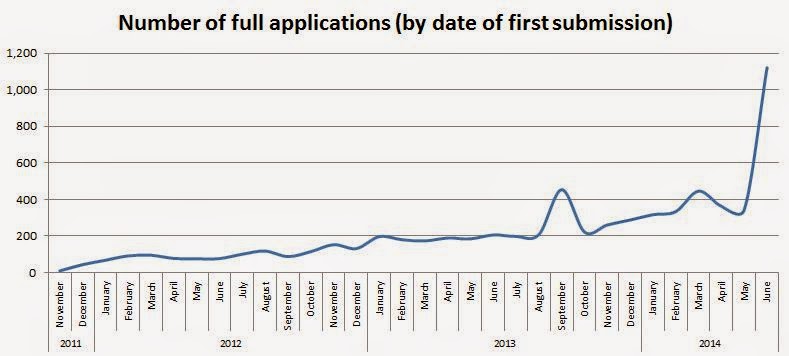
Of note, particularly to those considering installing a biomass system, is the recent acceleration in applications seen in June.


Whilst the precise reasons for this dramatic increase are not clear (backlog?) it is possible that it might lead to additional tariff adjustments later in the year (on top of the 5% reduction for small biomass implemented on July 1st).

In terms of geography the South West region continues to lead the way with 19% of all installations. 


In the South East, where this blog lives, Kent has the most accredited installations.


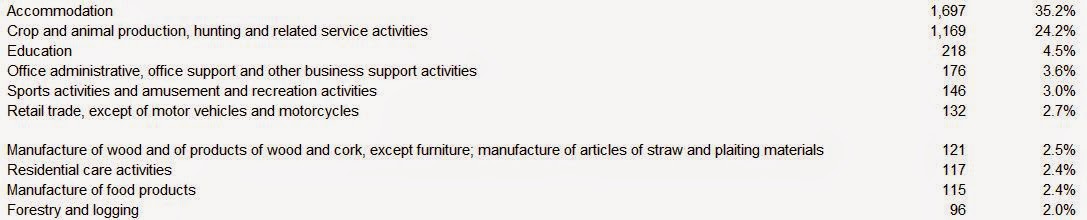
The top 10 business types benefiting from the RHI are shown in the table.


Will there be more tariff adjustments in 2014?

In simple terms - yes, quite likely.

The results of the next tariff review will be  the announcement on 31 August 2014 (with any changes commencing on 1 October 2014).

The data suggests the expenditure thresholds for the overall RHI budget are starting to be exceeded.  The cause of this is 'small biomass' tariff which is now well over its  expenditure threshold. 

This situation has been tolerated for a while because uptake of the non-biomass tariffs was, and still is, well below forecast and the overall budget was within its limits.  The difference now is that uptake of the 'small biomass' tariff has accelerated so fast that it has now impacted the finances of the overall scheme.

Given the scale of the current overspend it is possible that a 10% reduction in the 'small biomass' tariff might take place on October 1st.  This would reduce the tariff from 8.4 p/kWh (tier 1) and 2.2 p/kWh (tier 2) to 7.6 pence and 2.0 pence, respectively.

The impact of this reduction for a 199 kW biomass boiler is around £2,000 a year (although this depends heavily on the heat load and of course the actual meter readings).

Summary

There has been a large 'spike' in applications in June - whether this develops into a 'trend' is yet to be seen.  Regardless of this the scheme overall is starting to overspend and as such the rules for degression are clear.

Any decision to reduce tariffs (in October) will most likely affect the 'small biomass' tariff.

Any sub-200 kW installations that are currently in progress now have a clear signal to complete as soon as possible.  New projects, with an expected commissioning date post-October 1st, should probably factor-in a lower tariff for feasibility and business planning purposes.


Thursday, 26 June 2014

Non-domestic RHI - small biomass tariff reduced

Ofgem has announced that the small biomass tariff will be reduced by 5% from July 1st 2014.

This is in response to increasing uptake in the sub 200 kW category as well as higher than anticipated levels of eligible heat being submitted in meter readings.

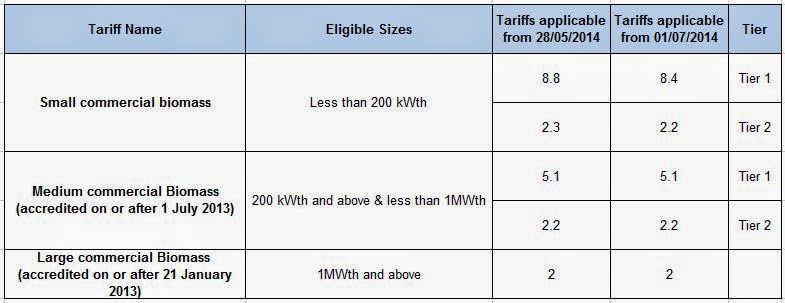
This degression of the small biomass category follows the annual inflation increase that took place on April 1st.  This saw the tariff increase from 8.6 p/kWh (Tier 1) and 2.2 p/kWh (Tier 2) to 8.8 and 2.3 p/kWh, respectively.

The 5% reduction from July 1st will mean that the tariff falls again to 8.4 and 2.2 p/kWh (which is similar to the levels seen in 2012).


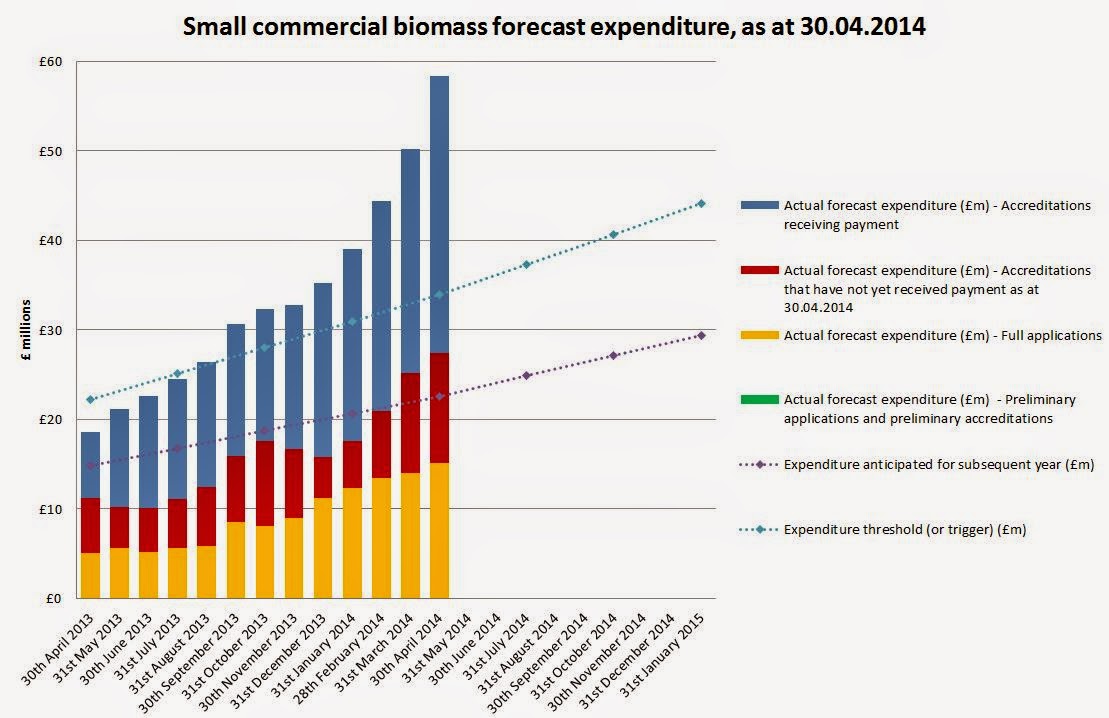
The latest uptake figures clearly indicate that whilst the RHI overall is operating within it budgets, uptake of the small biomass category has accelerated.


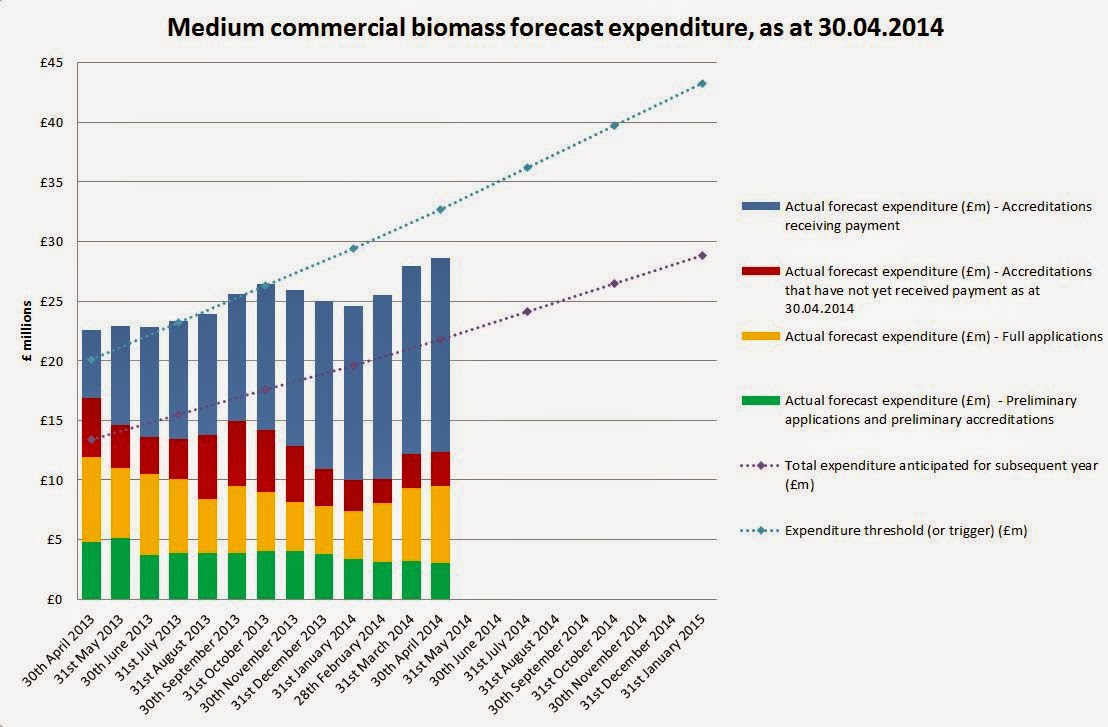
Meanwhile, uptake of the medium tariff remains strong but is currently operating below budget forecasts.


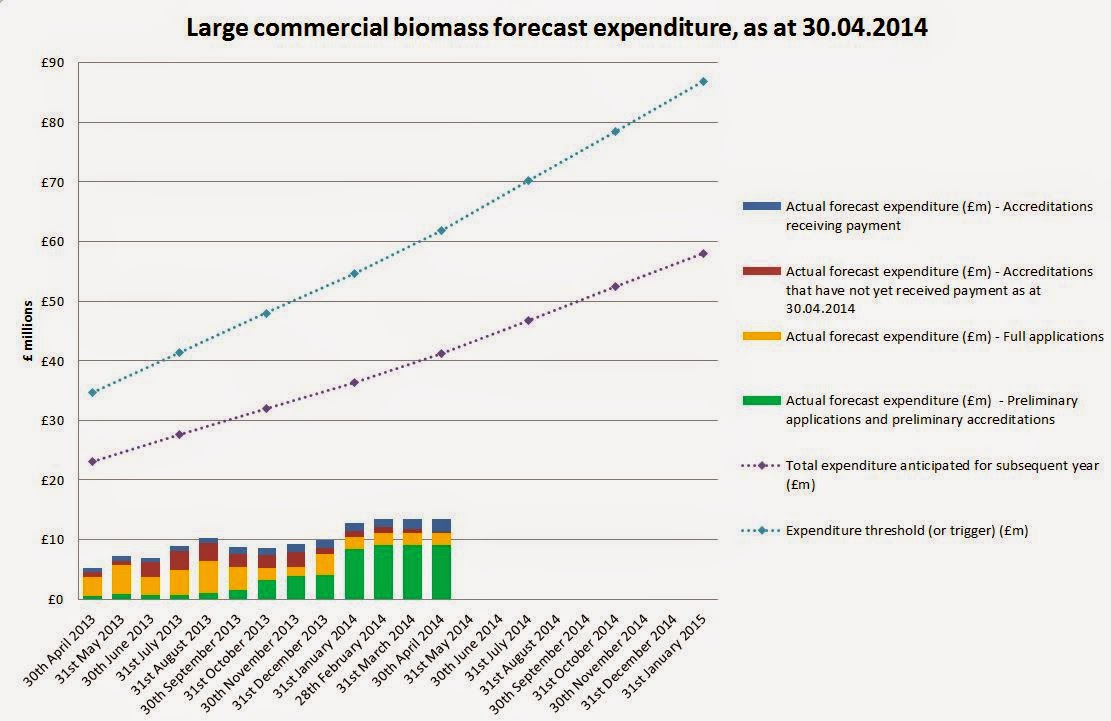
Activity in the large biomass tariff category is far lower than the other categories.  However, there are clearly a number of schemes at pre-application stage (green column) and these may start to have greater impact on budgets over the next 24 months.


Overall biomass heating remains the clear 'winner' in the non-domestic RHI.  The majority of the available budget (and installed capacity) is currently allocated to biomass technologies and activity in the other RHI-eligible technologies remains relatively modest. 

Tuesday, 17 June 2014

New report assesses alternative tree species to Ash

We have been closely following Ash dieback over the last two years and have spoken to many woodland managers and stakeholders about the impact of the disease.

One of the most frequently asked questions relates to how woodlands will adapt to the disease, and in particular which tree species will make effective replacements.

Until recently our response to this question was fairly limited and was based on a few species such as small leaved lime.

It is therefore very timely that Natural England has released a new report that may help guide practitioners in the selection of alternative tree species that are ecologically similar to Ash.

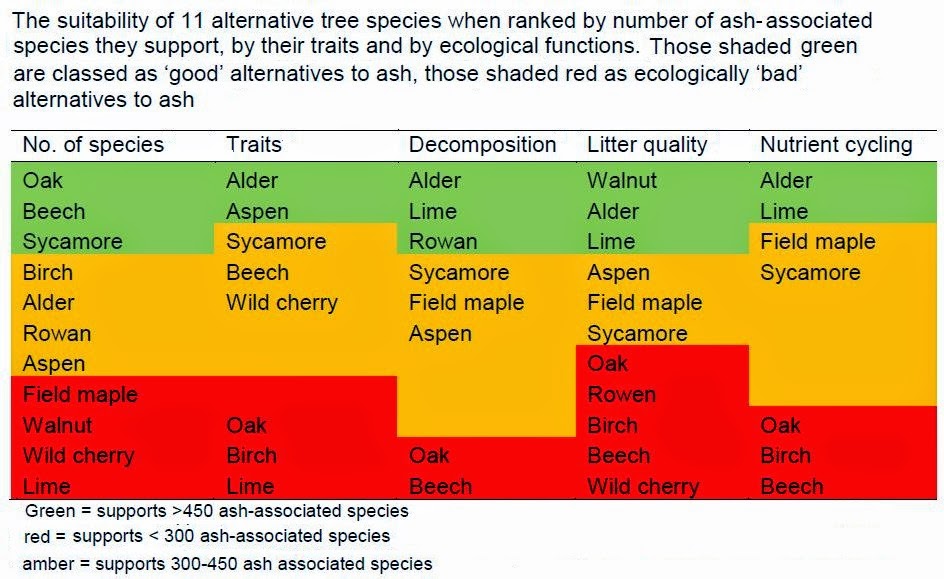
The report (Assessing and addressing the impacts of ash dieback on UK woodlands and trees of conservation importance) examines the ecological function of 11 tree species considered most likely to replace ash across the UK. 

It also provides a range of case studies showing how existing management plans may be adapted to conserve ash-associated biodiversity should significant ash dieback occur.

In this post we have attempted to summarise the main findings of the report to assist with the dissemination of the findings.  If proactive management action is being considered we recommend reading the report in full.

The eleven tree species looked at were:


The ecological similarity of these alternative to Ash was assessed by considering three main factors:
  • their ecological functioning
  • the number of ash-associated species they support
  • their traits
Ideally any alternative tree should be similar to ash in all of these characteristics.

Ecological functioning

Ash lies at an extreme of the ecological range of native tree species in the UK. It produces nutrient-rich highly degradable litter that does not form a deep litter layer and which maintains a high soil pH.

For ecological functioning the  11 alternative species were assessed in terms of leaf litter decomposition rates, litter quality (chemical and physical properties), nutrient cycling and succession rates.

A change from ash to a tree species with very different ecosystem functioning (e.g. oak or beech) will result in changes in the characteristics of the woodland: slower nutrient cycling, increased carbon storage and changes in the ground flora species present.

Ash-associated species

Around 1,000 species are known to 'use' Ash trees and tree species native to the UK support more ash-associated species than non-native tree species.

Native oak species were found to support the greatest number of ash-associated birds, invertebrate, lichen and mammal species.  

Elm, hazel, oak, aspen and sycamore were found to support the greatest number of the ash-associated species that are most vulnerable to ash-dieback. However elm remains susceptible to Dutch elm disease and is therefore not widely suitable as an alternative to ash.

Traits of alternative tree species

The traits of trees such as tree height, bark pH and fruit type indicate, in part, the type of habitat created by a tree species and the resources available to species that use the tree. Ideally the traits of any alternative tree should be as similar as possible to ash.

Of the native tree species assessed elm had the most traits the same as ash followed by silver birch and rowan.

Results

The study found that the alternative tree species that support the greatest number of ash-associated species are very dissimilar to ash when assessed by traits and ecological function. 

  • Oak supports 640 of the 955 ash-associated species and beech supports 505 ash associated species.
  • However, in terms of ecological function, oak and beech have much slower rates of leaf litter decomposition and nutrient cycling than ash and their canopies cast a much darker shade which will influence the ground flora species.
  • Alder is similar to ash with respect to ecological function (leaf decomposition rates, litter quality and nutrient cycling) but supports fewer ash-associated species (389 out of 955)
As such the method that is most suitable to assess how similar the alternative tree species are to ash will depend on the objectives at the site, for example maintaining ash associated species or maintaining the woodland character and ecological function.

Management scenarios

Six management scenarios that could be applied to woods infected with ash-dieback were considered over two time periods (1-10 years and 50-100 years). The scenarios were:
  1. Non-intervention – stands are allowed to develop naturally with no interventions.
  2. No felling with natural regeneration promoted – no felling but otherwise stands initially managed for natural regeneration.
  3. Felling – all ash trees and coppice removed in one operation with, if necessary, additional trees of other species cut to make the operation more viable.
  4. Felling and replanting – all ash trees and coppice removed in one operation with, if necessary, additional trees of other species cut to make the operation more viable. Then active management to replant with alternative tree and shrub species.
  5. Thinning – regular operations to thin stands by removing diseased and dead trees or coppicing ash, with, if necessary, additional trees of other species cut to make the operation more viable.
  6. Felling with natural regeneration promoted – all ash trees and coppice removed in one operation with, if necessary, additional trees of other species cut to make the operation more viable. Then active management initially to achieve natural regeneration in the stand, with subsequent management to develop overstorey species.
In the short term (1-10 years) more ash-associated species were supported under scenario (5) ‘thinning’ than scenario (6) ‘felling with natural regeneration promoted’.

In the long-term (50-100 years) there was little difference between scenarios (5) and (6) in their impact on obligate and highly associated ash species with of these species predicted to decline in abundance or be at risk of extinction. 

However, the confidence level of these assessments is only low to medium suggesting that the actual impact on ash-associated species is currently only partially understood.

For species 'partially associated' the assessment is somewhat brighter:
  • Species partially associated with ash are generally predicted to decline initially following the onset of ash dieback but after 50-100 years the majority of partially associated species are predicted to be unchanged in abundance compared to current population levels due to an increase in the abundance of other tree species which they utilise.
Overall there is a clear difference in the response of highly associated species, which are predicted to either decline or go extinct and the majority of partially associated species which are predicted to remain unchanged in abundance after 50-100 years.

Conclusion

When woodland managers are considering which alternative tree/shrub species to regenerate or plant in order to mitigate the impacts of ash-dieback on biodiversity, the number of ash-associated species supported is only one factor to consider. 

Woodland managers should also think about other information provided in this report such as the impact alternative trees might have on ecosystem function and factors which will influence the occurrence of ash-associated species in the woodland, such as: woodland structure, food availability, the size, shape and number of holes in trees for roosting bats and hole nesting birds, interactions between species, and changes in woodland ground flora composition.

Ash dieback is just one of several diseases and other potential drivers of change within woodlands within the UK. Other tree diseases and drivers such as grazing, pollution and climate change will also need to be taken into account. 

Management for biodiversity will usually be considered together with the other objectives of woodland management including timber production, amenity, flood prevention and carbon sequestration.

Monday, 2 June 2014

Training voucher scheme to help cross-skill heating engineers to renewable heating systems

The Department for Energy and Climate Change (DECC) has announced a £650,000 fund aimed at expanding the skill set of domestic heating engineers to include the installation and maintenance of renewable heating systems. 

Many of the people installing renewable heat technologies today come from the heating and plumbing sectors and most of the experience is related to oil, gas and LPG systems.


Whilst most conventional renewable technologies are based on familiar electrical, mechanical and hydraulic principles, renewable technologies bring with them a range of additional technical considerations that may not have been encountered during conventional oil, gas or LPG projects.  

Biomass heating, for example, is a proven and reliable technology, but a lack of installation experience can lead to technical difficulties, additional costs and sub-optimal performance.  For example, poorly designed fuel stores can lead to fuel degradation and high fuel delivery costs.

Giving consumers and installers reliable information is an important part of helping them make decisions about their heating system. With the launch of the domestic Renewable Heat Incentive it is important to ensure that consumers have a range of installers to consult, and that these installers are trained to the very latest standards.

The two main areas of support are as follows:

Short course vouchers for existing heating installers

  • The short course vouchers are aimed at existing plumbing and heating engineers in order to encourage them to undertake training in renewable heating technologies.
  • This part of the scheme will deliver vouchers worth 75% of the cost of the training and assessment, up to a maximum of £500 per voucher (including VAT).
  • A maximum of ten vouchers per company will be available. To be eligible the company must be a small to medium-sized enterprise (SME).

Vouchers will be available for:

  • Solar thermal
  • Heat pumps (both air source and ground source)
  • Biomass
  • For solar thermal and heat pump training courses to be eligible, the training must include a QCF assessment that leads to a qualification that is accredited by an awarding organisation. 

Apprenticeship support vouchers

  • The apprenticeship support scheme will support those nearing the end of their plumbing/heating apprenticeship to become skilled with one or more renewable technologies.
  • The apprenticeship support vouchers are worth up to £2,500(including VAT).
  • A maximum of ten vouchers per company will be available. To be eligible the company must be a small to medium-sized enterprise (SME).
  • If an apprentice has already chosen to take the “renewable technology” pathway, they can apply to extend the number of technologies within that pathway and use the funding to support that training.
  • If an apprentice has already selected a non-renewable pathway such as oil or gas, they can still apply and use the funding to take one or more of the QCF units in the renewable technology pathway.

Eligible training includes:

  • Understand the fundamental principles and requirements of environmental technology systems
  • Solar thermal (installation & service and maintenance)
  • Heat pump (installation & service and maintenance)
  • Biomass [solid fuel] (installation & service and maintenance)
  • In addition applications can be made from apprentices to support them in other ways, such as the provision of learning materials and, if required, assistance to enable them to access work types that they may require to complete their apprenticeship programme.

Full details can be found here.

Green heat technologies more affordable with RHI upgrade

The Department for Energy and Climate Change (DECC) has announced changes to the non-domestic (commercial) Renewable Heat Incentive (RHI).

The main changes are as follows:
  • Increased financial support for:
    • renewable CHP
    • large biomass boilers (over 1MW)
    • deep geothermal
    • ground source heat pumps
    • solar-thermal
    • biogas combustion
  • New technologies added:
    • air-water heat pumps
    • commercial and industrial energy from waste

  • An evolved approach to budget management:
    • Improved market intelligence has been used to inform growth rates across the range of renewable heating technologies supported
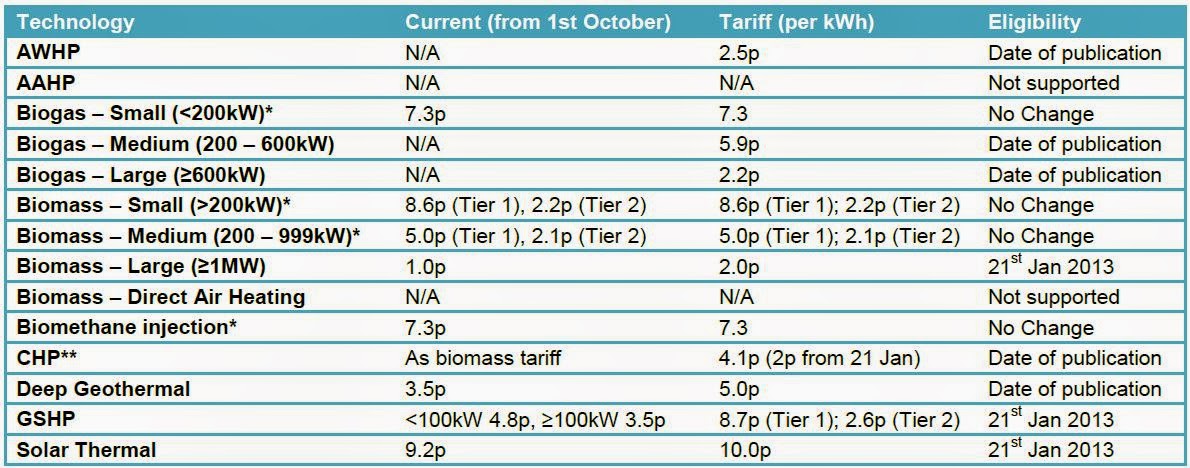
The updated tariff table is shown below.


These changes are the result of co-operation between industry and Government, and have been welcomed by the Renewable Energy Association (REA) and affiliated trade bodies.

"The RHI is now a truly world-leading renewable energy policy," said the REA's chief executive Dr Nina Skorupska. "Almost all renewable heat applications are now supported under the scheme, offering businesses greater choice than ever before on how to sustainably meet their heating needs.”

The Solar Trades Association provided evidence to Government in support of increasing the 'value for money cap' for renewable energy support programmes, which has enabled support for solar water heating to increase to 10p/kWh (from 9.2 pence/kWh).

Stuart Elmes, chair of the STA Solar Thermal Working Group, said: 

"The extra support for solar heating means that the economics will now stack up for more projects. More swimming pools, sports centres, food factories and hospitals will now be able to afford year-round heating from the sun."

We have also proposed that future improvements should include front-loading RHI payments for solar into the first seven years, as with the domestic scheme, to help businesses get over payback hurdles."

Support for large biomass heat has doubled (to 2p/kWh), but this technology sub-sector still draws the lowest fixed level of subsidy of any low carbon technology.

The newly formed Wood Heat Association (WHA) announced its affiliation to the REA last week. Speaking of these changes to the RHI, the WHA's interim chairman Julian Morgan-Jones said: 

"Under the previous cost-control mechanisms, wood heat was being unnecessarily constrained in order to preserve head room in the budget for heat pumps that was clearly not going to be used. The revised cost control mechanisms more closely match real world deployment and will ensure that wood heat can maximise its contribution to cost-effective emissions savings and renewable energy targets."

The RHI counts towards the UK's 2020 renewable energy target and helps reduce the UK's dependence on polluting fossil fuels. The above changes came into effect on May 28th 2014.

Full details can be found here.

Friday, 30 May 2014

What are the top twenty questions for forestry & landscapes?

The Top twenty Questions for Forestry & Landscapes (known as the T20Q survey) has already attracted over 500 questions from respondents around the world.

The T20Q survey is seeking the input of anyone who has an interest in forestry, forest products & ecosystem services to suggest priority questions for research and policy that really do need attention, whether locally, regionally or on the world stage.

The questions can be submitted through an online survey that is now available in French, Spanish and English.


The Center for International Forestry Research (CIFOR) are co-ordinating this global project to encourage conversations about some of the biggest problems facing the world today.

CIFOR aims to draw effectively on the knowledge, expertise and insights of the global community of researchers, practitioners and those with a love of forests will help broaden conversations and focus attention on the wide community of forestry.

Responses to the survey can be anonymous, but basic descriptive information provided by respondents will allow priorities to be reported at global, regional and national levels, and for particular communities of interest. So T20Q will also inform many levels and arenas of decision making.

The T20Q website can be found here.  Follow the discussion on Twitter @Forestry_Q and via the hashtag #t20q.”

Thursday, 29 May 2014

Woodland improvement grant scheme extended – apply now!

The Woodfuel Woodland Improvement Grant (WIG) has been extended and is open for applications – but only until the end of September this year. If you have any roads schemes in mind get your applications in as soon as possible.

The Woodfuel WIG funds access projects which will enable the sustainable extraction of timber from woodland where it is currently inaccessible.

It can also pay for professional support measuring and marketing timber from under-managed compartments.

The current grant covers up to 60% of the cost of work and can be used to fund development on every type of forest road, from quad bike tracks to haul roads for 44 tonne timber wagons, and everything in between. 

Funded work could include the installation of new roads, loading bays or entrance gates, or repairs to faults along access routes, such as damaged bridges and drainage repair.

The timescale for the application process is as follows:

  • End of September 2014 – All grant applications must be submitted
  • End of December 2014 – Contracts must be signed
  • End of September 2015 – All work must be completed and claimed for

Previous grants handed out include £9,600 to improve access roads to a woodland area; £7,500 for the construction of long haul extraction tracks, loading bays and bridge repairs; and £50,000 for the creation of access tracks to a previously unmanageable area of land.

Click here to read about these and other grants awarded by the Woodfuel WIG scheme.

A series of videos have also been produced to help potential applicants - the first of these can be found here.

To find out more about getting a Woodfuel Woodland Improvement Grant, contact Mike Furness on 01494 568970 / mike.furness@ngagesolutions.co.uk.

The grant is delivered by Ngage Solutions across the South East, South West and the county of Cumbria, on behalf of The Forestry Commission.


Monday, 19 May 2014

Business development grants available from Low Carbon Plus


The markets for waste wood, biomass fuel, firewood and fencing are continuing to improve in Kent and we are aware of several new projects and initiatives that should impact right across the supply chain. 

We also know that the sector has struggled with investment in machinery in recent years.  This is partially due to poor markets, but also because grants programmes such as LEADER are not currently active.

Help is at hand!  

The Low Carbon Plus project offers grants to businesses to fund 45% of the cost of qualifying projects. The minimum grant that can be awarded is £1,000 and the maximum grant amount is £20,000.

We are aware that several Kent-based woodland management/wood fuel businesses that have already successfully applied to Low Carbon Plus.  One firewood supplier will use the grant to help improve storage facilities whilst a woodland contractor will use the grant for a new forwarder.

More details can be found below.

Projects must lead to business growth and/or job creation.  Grant funding can be used to cover the following types of expenditure:

  • Development finance: funding required to expand the business such as marketing costs
  • Plant and machinery: costs of re-tooling and installation of machinery and hardware, as well as training required to operate it
  • Intangible assets: including costs of purchasing patents, IT, software and licences  
  • Consultancy costs: including marketing and business planning

Funding cannot be allocated retrospectively, and only applications where no activity has yet taken place will be considered.

The initial application form can be found here.  Participants are encouraged to join the Low Carbon Kent business network.

Friday, 9 May 2014

Biomass Suppliers List

We have been referring to new requirements around the sustainability of biomass fuels for some time now so we were pleased to see that the Biomass Suppliers List (BSL) has now been launched.

The Biomass Suppliers List is the process employed by UK Government to ensure that publicly funded subsidies such as the Renewable Heat Incentive (RHI) remain eligible under the EU Renewable Energy Directive (RED).

The RED Directive requires users of biomass fuel that are claiming the RHI to meet a lifecycle greenhouse gas (GHG) emissions target of 60% GHG savings against the EU fossil fuel average.

In a nutshell this means that the carbon footprint of a biomass fuel must deliver a substantial carbon saving compared to oil, gas or coal to ensure that biomass retains its 'low carbon' or 'carbon neutral' status.

What does this mean to users and producers of biomass fuels?

The BSL applies to users, producers, self-suppliers and traders of 'woody biomass'.  

For a fuel user in receipt of the RHI (commercial or domestic) they will need to demonstrate to Ofgem that their fuel is from a source recognised by the BSL. 

In turn this means that anyone supplying an RHI accredited biomass boiler will need to be registered on the BSL.  Self-suppliers will also need to be listed on the BSL.  

In addition to BSL accreditation biomass traders/wholesalers will also be listed on a public register.

Effectively any fuel used or supplied to an RHI accredited boiler will need to have BSL accreditation.

Which fuels are included?
  • Pellets – virgin
  • Pellets – waste
  • Pellets – waste virgin blend
  • Briquettes – virgin
  • Briquettes – waste
  • Briquettes – waste virgin blend
  • Chip – virgin naturally seasoned
  • Chip – virgin force dried
  • Chip – waste
  • Chip – waste virgin blend
  • Firewood – virgin naturally seasoned
  • Firewood – virgin force dried
  • Firewood – waste
  • Firewood – waste virgin blend
What are the requirements?

All applicants must agree to the scheme terms and conditions, which include requirements around reporting, agreement to be subject to periodic audits, and the provision of proofs of purchase in the form of invoices or receipts with information about the fuel on them.

How do I apply?

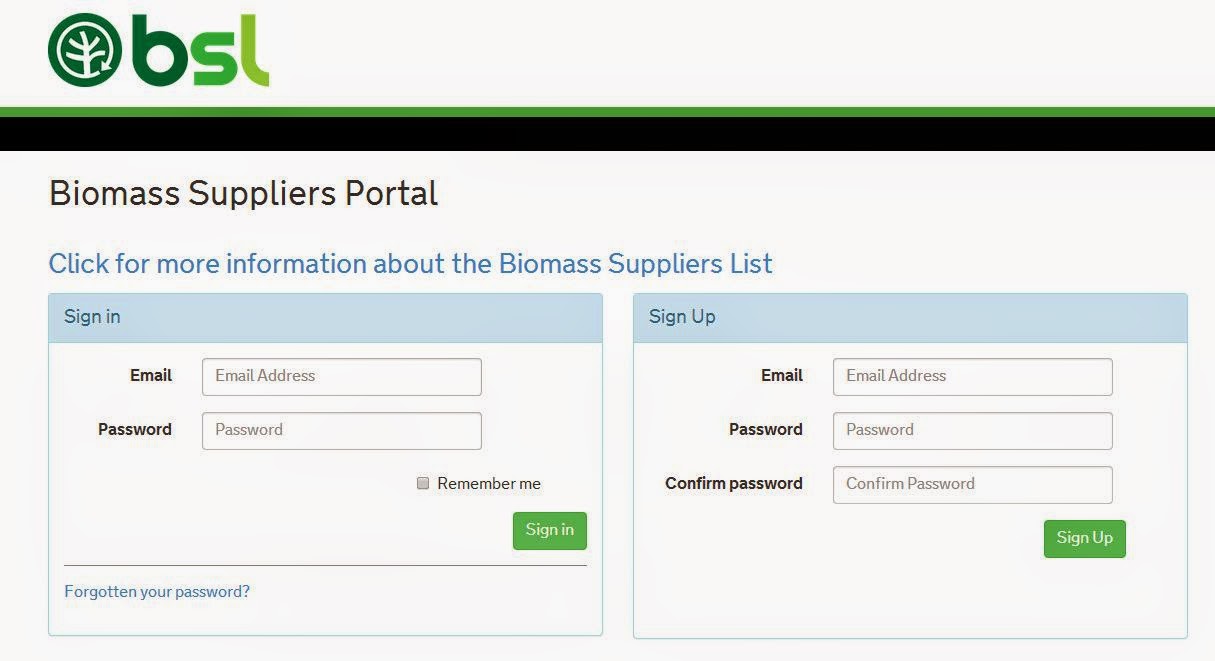
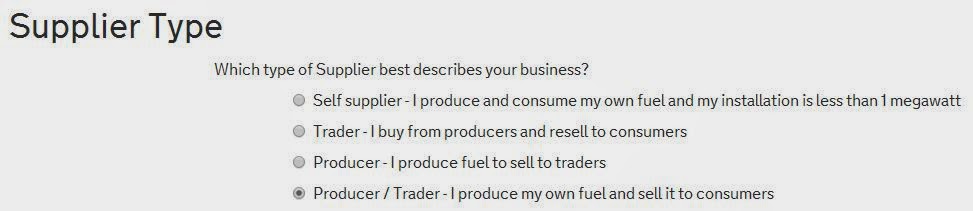
The application process is completed online at the new BSL portal.


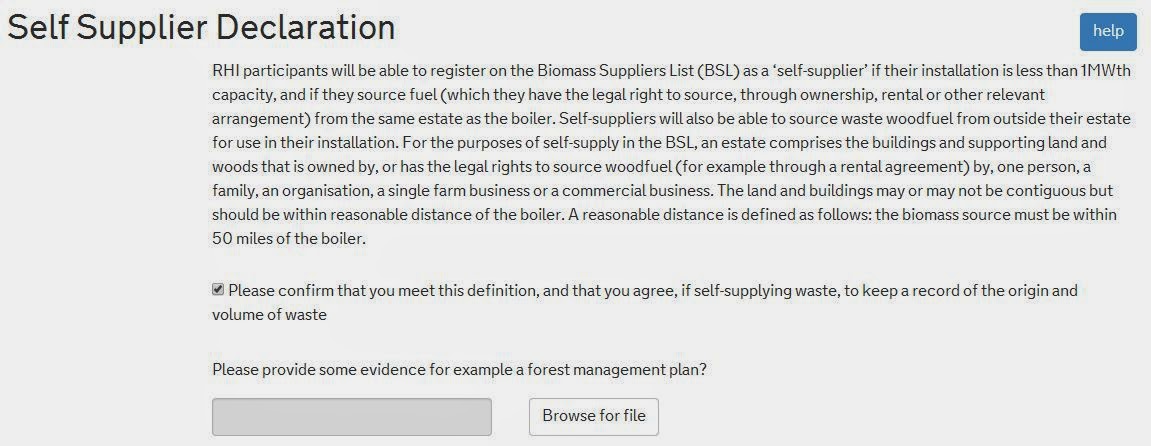
For users and self-suppliers the process is relatively simple.  After selecting the a supplier type applicants are required to respond to a set of questions (which vary according to the supplier type).


Self-suppliers, for example, are required to sign a declaration and upload a copy of a Forestry Commission approved management plan.


For traders and producers the process is a little more complicated and may require the completion and uploading of product data and carbon footprint calculations (via the B2C2 carbon calculator).


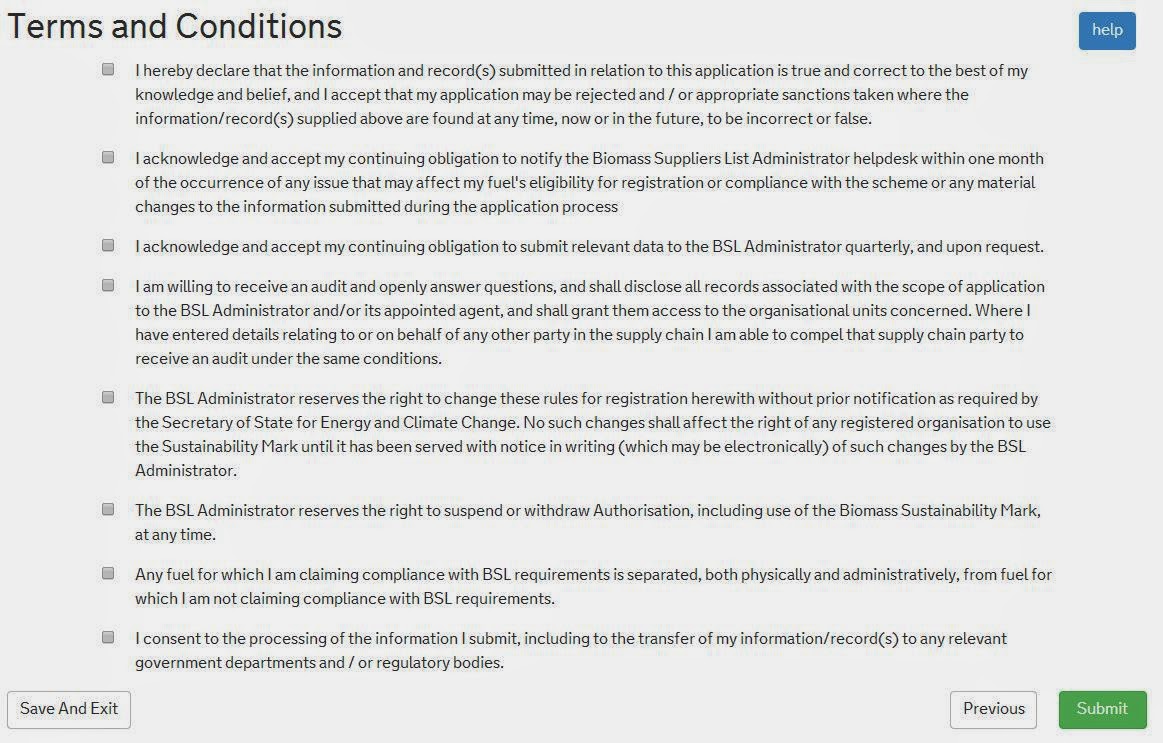
All applicants need to accept a set of terms and conditions that confirm acceptance of the scheme rules and which enables the BSL to undertake ongoing checks or audits.


The BSL FAQ is a good place to start.  Application guidance is also available on the BSL portal.

Overall we feel that the BSL is an appropriate method for accrediting and monitoring biomass fuels that are being used in publicly-funded biomass boilers.  

The BSL may initially appear to be bureaucratic but we are confident that most people will get to grips with it fairly easily.

Wednesday, 7 May 2014

Plant health - new grant and revised guidance from Forestry Commission

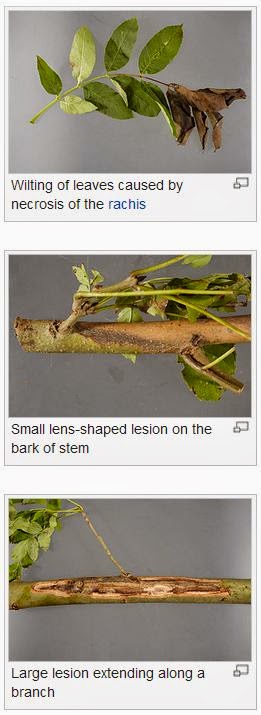
Source: Wikipedia
New support is now being offered by the Forestry Commission through a new Plant Health Woodland Improvement Grant (PH WIG) which brings together a number of previous plant health support mechanisms. 

Additionally the FC will be retaining Woodland Regeneration Grant (WRG) where the restocking is following defined Plant Health issues. 

The respective new and updated guidance is available via the following links:

Plant Health Woodland Improvement Grant

Woodland Regeneration Grant

Plant Health WIG

The PH WIG brings together elements of the following previous grant support:

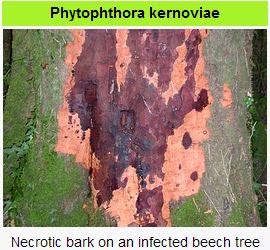
  • Removing Rhododendron within 3km of Phytophthora ramorum and kernoviae infections (which is mainly affecting south west England, although there is one reported outbreak site in Kent near Ashford).
  • Removing P.ramorum infected immature larch paying a site fee to cover the costs of professional help in implementing harvesting plans for P.ramorum infected larch

Source: Wikipedia
This new PH WIG also replaces elements of the previous WIG for removal of recently planted ash on Chalara fraxinea infected sites.

This grant is designed to cover the infections mentioned above and any subsequent plant health disease the Forestry Commission decides requires action that can be funded through EWGS.


Plant Health WRG

Due to the significant uptake of WRG in previous years and the need to maintain funding for other, higher priority, grant types, funding for WRG is
now limited to the 14/15 and 15/16 years to restocking sites related to plant health issues only. The revised guidance sets out: 
Source: Wikipedia

  • Revised eligibility requirements for WRG in relation to Plant Health payment rates and available claim years
  • Extension of the Plant Health related supplements to include Chalara infected sites

Tuesday, 6 May 2014

Meadow plant identification - Free training event


Wednesday, 30 April 2014

New biomass sustainability requirements for the Renewable Heat Incentive

Ofgem has revealed more detail on how it intends to roll out and implement sustainability requirements for biomass fuels.

This is particularly important as it not only affects the owners and operators of RHI accredited biomass boilers but also producers and traders of biomass fuels.

The guidance applies to both the non-domestic (commercial) and domestic RHI and participants will need to comply with requirements from date they come into force (although the precise dates are not stated).

All participants are strongly encouraged to start sourcing from a supplier on the forthcoming Biomass Suppliers List (BSL) supplier in advance of the criteria coming into force later this year.

The new requirements also take into account participants who self-supply, for example an estate that processes wood chip from its own woodland.  Details on this can be found below.

From Autumn 2014 (no earlier than 1st October 2014)

Biomass fuel used by RHI participants must meet a lifecycle greenhouse gas (GHG) emissions target of 34.8g CO2 equivalent per MJ of heat.

Don't panic!  All this means is that the fuel (chip, logs, pellets) must achieve a 60% GHG saving against the EU fossil fuel average.  And it is the supplier of the fuel that has to demonstrate the GHG saving and not the end user (although the end user will have new reporting responsibilities if they are participating in the RHI).

From Spring 2015 (subject to the Parliamentary process)

Ofgem plans for biomass fuel to meet land criteria, which will differ for different types of biomass:
For woodfuel the criteria are outlined in the UK Timber Standard for Heat and Electricity.
How do non-domestic RHI participants comply?

This is rather simple actually.  A new Biomass Suppliers List (BSL) is currently being set up.  This is being managed by the good people at Woodsure who have been appointed by Ofgem to manage the BSL.  The alternative option is to self-report directly to Ofgem.

Participants can switch between these methods.  Of the two the BSL route sounds more straightforward to us.
  • Sourcing woodfuel from the Biomass Suppliers List (BSL)
    • Participants may still need to also provide Ofgem with a quarterly declaration that the biomass fuel they have used was sourced from a supplier registered on the BSL and marked as sustainable.
  • Self-reporting to Ofgem on the sustainability of their fuel
    • This will involve making a quarterly declaration to Ofgem of the lifecycle GHG emissions associated with each consignment of fuel used in that quarter, and provide an annual independent audit of the lifecycle GHG emissions associated with biomass used in that reporting year.
For the domestic RHI all fuel used from the date the criteria come into force must be sourced from a supplier registered on the BSL at the time the fuel was purchased. Participants are required to make an annual declaration to Ofgem that the biomass fuel used meets this requirement.

Self-suppliers (domestic and non-domestic) < 1 MW

Participants self-supplying woodfuel from the same estate as the installation will be able to register on the BSL as a self-supplier without undertaking an assessment against the sustainability criteria if the boiler is less than 1MW capacity

Ofgem recommendeds:
  • Self-suppliers provide some evidence of their ability to self-supply, such as a Forestry Commission approved management plan
  • Self-suppliers should register on the BSL before the sustainability criteria come into force in Autumn 2014.
Self-supplying participants who cannot meet all of their needs from their own woodland will be able to top up with fuel purchased from a BSL supplier.

Tuesday, 22 April 2014

Updated commercial RHI tariffs announced

Ofgem has recently released the updated tariffs for the commercial RHI scheme.  These changes have taken place primarily due to the annual inflation of the RHI, the third increase since the scheme was launched.  However, changes have also taken place in response to increasing uptake of the scheme, particularly in the small and medium biomass projects.

The inflation of the tariff, this year by 2.7%, affects those already in receipt of payments from Ofgem as well as installations that will become accredited after April 1st 2014.

The following table focuses on the biomass tariff.  For example, for boilers sized up to 199 kW the Tier 1 tariff has increased from 8.6 p/kWh to 8.8 kWh (the Tier 2 tariff from 2.2 to 2.3 p/kWh).  The last column in the following table shows the updated tariff (from 01/04/2014).


Whilst these changes are not earth shattering the increases help to further enhance the economics of RHI accredited biomass boilers.  For example, the annual RHI payment for a 199 kW boiler serving a 280,000 kWh heat load would increase by around £500 per year.
The only downside to these changes is the reduction in the tariff for medium-scale biomass boilers that were accredited after July 1st 2013 (Tier 1 down to 5.1 p/kWh and Tier 2 remains at 2.2 p/kWh).  This change indicates that degression has taken place in the medium category due to rising uptake of the RHI in this category.

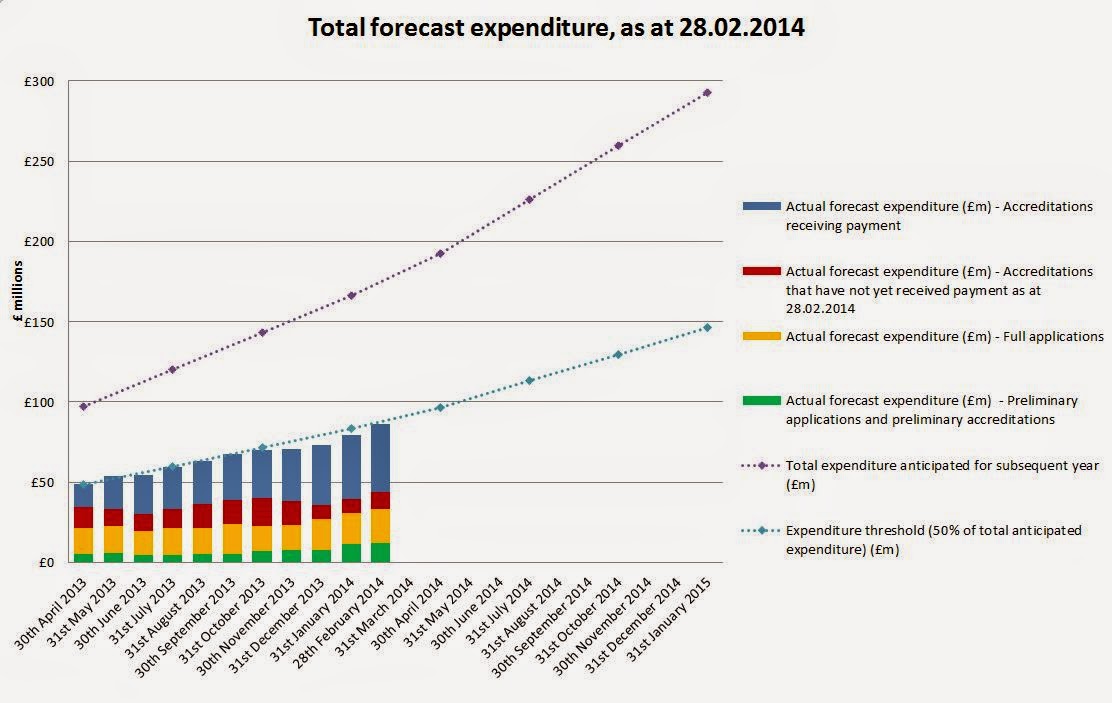
Whilst the overall expenditure for the RHI is proceeding according to forecast it is clear that the small biomass category has seen the largest increase in expenditure.


Ofgem states that:

"Forecast spend over the next 12 months for small commercial biomass is £44.4m. This means that estimated spend for this technology is already £10.4m above its 30 April 2014 individual technology trigger point of £34.0m. This increases the possibility of a reduction to this tariff in the next quarter. However, this would only occur if next quarter’s 50% trigger for the scheme as a whole of £96.4m was also exceeded, which would require a £10.1m increase in total expenditure over March and April."

Other developments include:

  • Forecast spend over the next 12 months for medium & large commercial biomass has increased by 4% and 6% respectively.
  • Forecast spend for small heat pumps has seen a significant increase of 25% in the last month.
  • Forecast spend for all other tariff categories have seen little to no activity this month and remain considerably below their individual tariff triggers for the next quarter.

The future risk of degression is summarised by Ofgem as follows:

"Whether any reductions occur next quarter depends on how well the scheme overall, and each technology tariff, performs during March and April and whether total scheme spend grows by £10.1 million in that time. An increase of this size would occur if the scheme was to continue to grow at the rate we have seen this month which would cause the 50% total scheme trigger of £96.4m to be hit. DECC will receive the data needed to make this forecast in May, and will publish the next quarterly degression announcement by 1 June 2014, following which, any reduced tariffs would come into effect from 1 July 2014."

Thursday, 3 April 2014

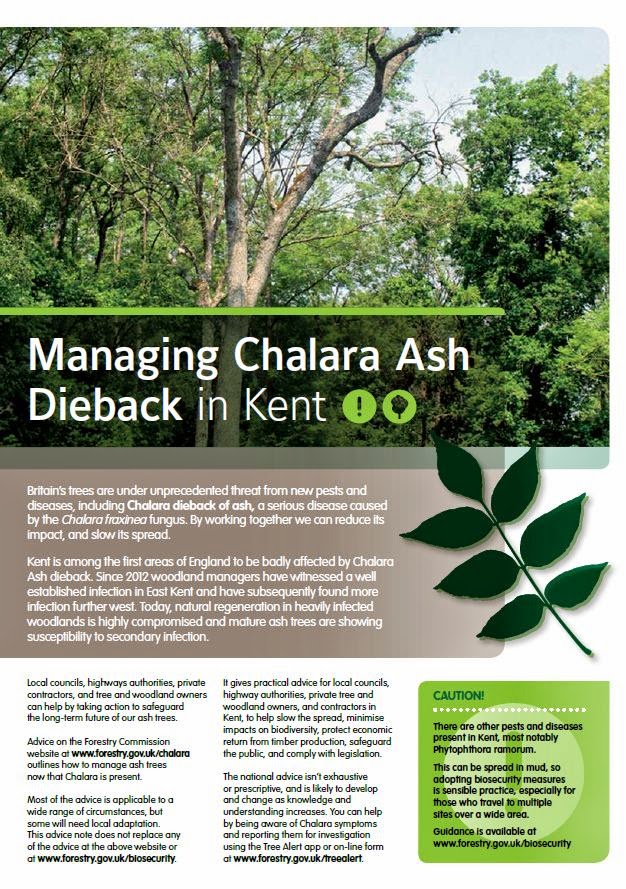
Kent’s tree experts lead on new guidance for Ash dieback

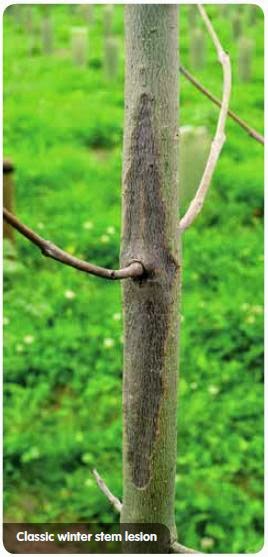
Britain’s trees are under unprecedented threat from new pests and diseases, including Chalara dieback of ash, a serious disease caused by the Chalara fraxinea fungus. 

Kent is among the first areas of England to be badly affected by Chalara Ash dieback. Since 2012 woodland managers have witnessed a well-established infection in East Kent and have subsequently found more infection further west. 

Today, natural regeneration in heavily infected woodlands is highly compromised and mature ash trees are showing susceptibility to secondary infection.

Ash is the most common tree in Kent (almost a fifth of all trees).  This, combined with the observed rate of spread and the high level of infection already present, make eradication of Chalara impossible.

The Kent Downs AONB Unit has worked closely with partners in the Arboriculture Association, Forestry Commission and Kent County Council to produce a guide which offers practical advice for local councils, highway authorities, private tree and woodland owners, and contractors in Kent. 

The main aim was to provide practical advice that might help slow the spread of Ash dieback, particularly from woods in high infection areas in the east of Kent to other locations in the west of Kent, and beyond, where infection rates are currently low.  

Other objectives were to provide advice that minimise impacts on biodiversity, protects economic return from timber production and safeguards the public.

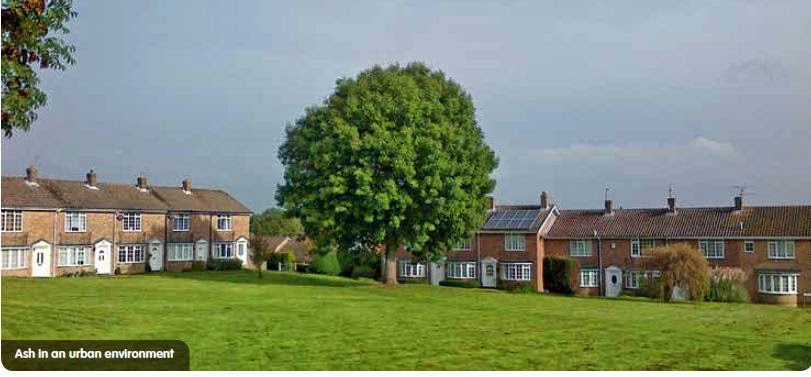
The guide provides a general overview of the disease and its current status before providing specific guidance for woodland managers and those managing tress in urban and sub-urban environments.  

It includes summary advice on how to manage infected ash trees in conservation areas and development sites, trees with preservation orders and ancient, veteran and heritage trees.  The guide also considers ash trees adjacent to highways, public open spaces and private property.


The guide was co-written by Jonathan Harding from the Forestry Commission, Dan Docker from Tunbridge Wells Borough Council, Mike Sankus from the Arboriculture Association and Tony Harwood from Kent County Council. 

The project was managed by the Kent Downs AONB Unit as part of the ADAFOR Interreg project, a cross-border forestry initiative that seeks to integrate knowledge and expertise to facilitate enhanced forest management and adaptation.

The guide is available to download for free our Google Docs folder.

For more information please contact:

Matthew Morris (Woodfuel Development Manager)
01303 815 171
Matthew.morris@kentdowns.org.uk